
 Back to top




Surgery Complications

Medical Negligence Solicitor and Partner - LLB (Hons) University of Mid-Glamorgan
Read more about Tony »Intended to reshape or reconstruct the nose, either for cosmetic or medical reasons, rhinoplasty or “nose jobs” are commonly performed procedures across the UK.
Like any surgery, rhinoplasty carries risks. While most procedures go smoothly and achieve the desired outcome, sometimes mistakes do lead to serious consequences, from nasal septum damage and disfigurement, to breathing problems and infections.
In this essential guide, we will highlight examples of negligent rhinoplasty and the complications these can create, and provide you with helpful advice if you or someone you love intends to make a rhinoplasty medical negligence claim.
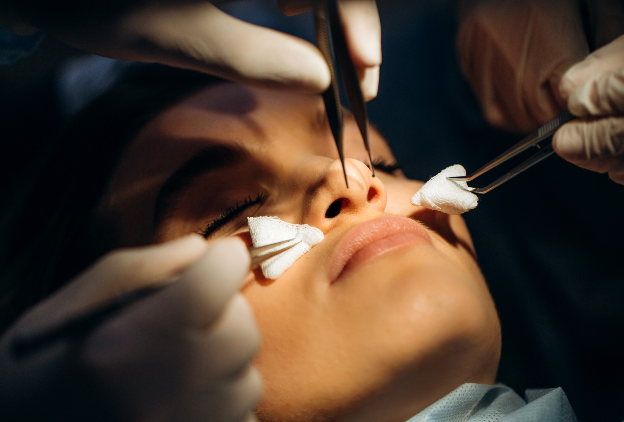
Rhinoplasty is the technical term for nose reshaping surgery or a nose job, designed to reshape or reconstruct the nose.
Rhinoplasty is often done for cosmetic reasons. According to data from The British Association of Aesthetic Plastic Surgeons (BAAPS), 1,938 patients underwent rhinoplasty in 2024, making it the sixth most-performed type of cosmetic surgery nationwide.
However, nose reshaping surgery can also be done for medical reasons, such as correcting breathing problems, fixing structural abnormalities, or repairing injuries.
If rhinoplasty is performed for medical reasons, it may be provided on the NHS. If for cosmetic reasons, it is typically only available from private hospitals and plastic surgeons.
Although rhinoplasty is a common cosmetic procedure, it still demands careful planning and technique to perform safely and correctly.
Like any surgery, rhinoplasty carries inherent risks, which should be explained to patients beforehand. Even if all appropriate steps are taken, a good outcome is not guaranteed.
However, if a poor outcome is due to a surgeon or healthcare professional falling below acceptable standards, then it may be grounds for a cosmetic surgery negligence claim.
Several examples of negligence during nose surgery include:
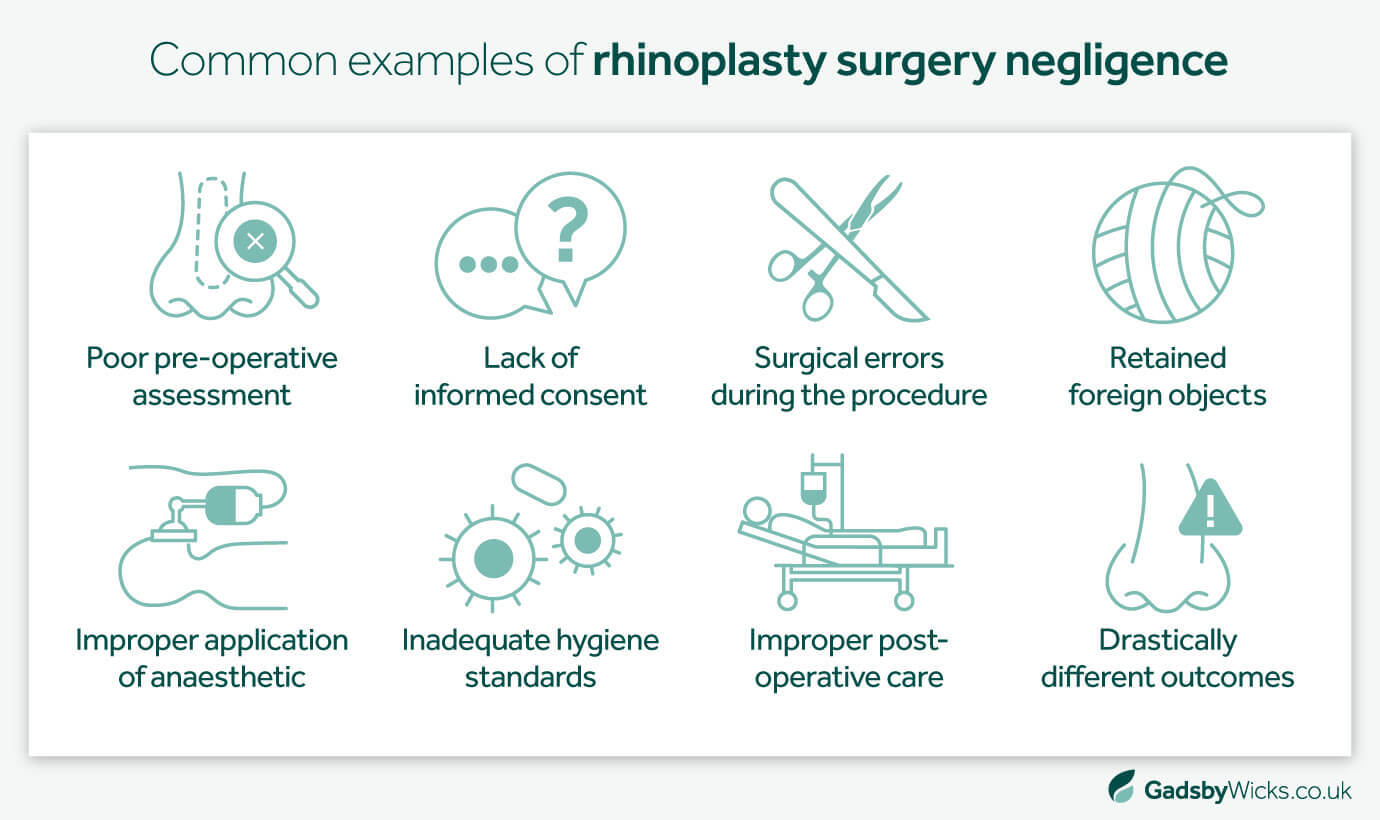
A substandard pre-operative assessment, such as analysis of skin thickness and nasal structure, or not understanding the patient’s goals, can lead to avoidable complications and unsatisfactory outcomes.
If the patient is not fully informed of the inherent risks associated with rhinoplasty, it may be considered negligent if they experience a poor cosmetic surgery outcome.
Mistakes during surgery, such as excessive removal of cartilage or bone, or damage to the nasal septum, can endanger someone’s health and the final result.
It is negligent for a surgeon to leave foreign objects, such as surgical packing, graft material or instrument fragments in the nose post-surgery.
Using too much anaesthetic can lead to cardiovascular, respiratory and neurological issues. Similarly, using too little anaesthetic can cause the patient to experience pain or regain consciousness during their procedure, known as anaesthesia awareness.
Unsterilised instruments or surgical environments may result in patients contracting infections that jeopardise their long-term health.
Poor monitoring of the patient’s welfare, prescribing inappropriate medications or removing bandages prematurely can all be examples of negligent treatment.
If the outcome of the patient’s surgery is noticeably different from what was agreed with the surgeon before the procedure, this may be grounds for a negligence claim.
Healthcare professionals who can be responsible for surgical errors during rhinoplasty include:
If an NHS hospital performed the rhinoplasty procedure, the claim will be made against the relevant NHS trust. If it was performed in a private clinic or private hospital, the claim is against the individual hospital or surgeon responsible.
Negligence before, during or after nose surgery can have a wide range of ramifications, ranging from unwanted results to serious injuries and infections. Examples include:
Many of these complications may require corrective rhinoplasty surgery to resolve. Others may have more severe, long-lasting consequences for those affected.
In addition to the physical ramifications, patients may also experience significant emotional distress after a botched cosmetic surgery. This psychological harm can range from a loss of confidence and self-esteem, to trauma and PTSD from the surgery itself.
When these complications occur, and could have been avoided with better care, those affected have a right to compensation and answers for what happened to them.
If you believe that you or someone you loved was harmed by negligent treatment during rhinoplasty, it is in your best interests to contact a specialist medical negligence solicitor or law firm. They are best equipped to review and investigate your claim, and determine if you have a valid case.
Before reaching out to a solicitor, it can be helpful to do the following:
As mentioned earlier, rhinoplasty has numerous risks. A poor outcome may not be the result of a negligent mistake, but something that happens regardless of the standard of care provided.
Proving cosmetic surgery negligence is based on three criteria:
A successful negligence claim requires all three of these factors to be proven.
For a breach of duty of care, you must show that the level of care you received was below the standard that would reasonably be expected from a competent plastic surgeon.
To establish causation, you must demonstrate a clear connection between the negligent treatment and the harm suffered. This is assessed on the Balance of Probabilities, meaning it must be more likely than not that the negligence led to the harm.
As UK specialists in cosmetic surgery negligence claims, our solicitors investigate a wide range of evidence to prove our clients suffered due to negligent treatment, including:
Independent medical expert reports play a key role in establishing both breach of duty and causation. For this reason, we maintain a broad network of cosmetic surgeons and other healthcare professionals who can provide clear, reliable opinions to achieve the most accurate assessment of the case.
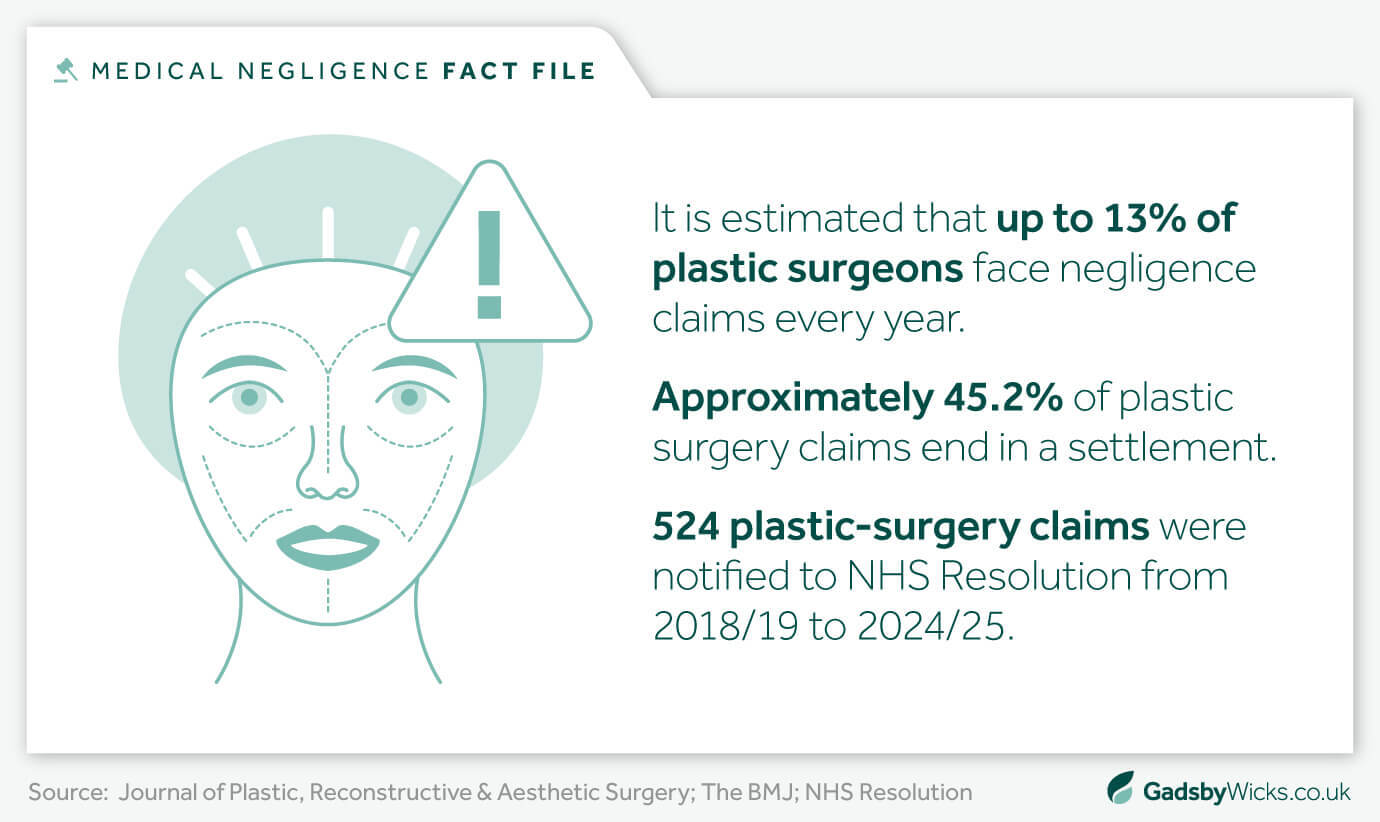
In most cosmetic surgery negligence claims, you have a time limit of three years from the date of your injury, or the date when you should have become aware of your injury (the Date of Knowledge) to launch your claim.
There are exceptions to this rule:
In any circumstance, we recommend starting your claim as soon as possible. This helps ensure that evidence remains fresh and relevant.
There is no definitive timeframe for a cosmetic surgery negligence claim, as the duration will depend on several factors, including:
We expect rhinoplasty negligence claims to take around two to five years to reach a final settlement. But this is only a general guideline, as every case is different.
At Gadsby Wicks, we will keep you regularly updated so you always understand how your claim is progressing.
There is no average compensation award for negligent rhinoplasty – every claim is unique, and compensation is always determined on a case-by-case basis.
Medical negligence compensation is split into two main categories:
General damages cover the physical and psychological harm caused by negligent rhinoplasty – often referred to as compensation for pain, suffering, and loss of amenity (PSLA).
In these cases, we may refer to the Judicial College Guidelines (JCG), which offer compensation value estimates for common injuries that may occur in these instances, including:
Special damages reflect the present and future expenses caused by the claimant’s injuries. Examples of this may include:
Special damages are often where there are the greatest variations in compensation awarded, as they depend on the claimant’s age, family circumstances, employment and numerous other factors.
If you or someone you know has suffered due to negligent rhinoplasty surgery, our specialist medical negligence solicitors are here for you. Since 1993, we have helped hundreds affected by cosmetic surgery complications get answers for what happened, and recover the compensation they need to find closure.
We treat your case with the compassion and attention to detail it deserves, keeping you informed at every step of the claims process. Plus, as a no-win, no-fee medical negligence firm, you will not pay us a penny unless we win your case, guaranteed.
Start your claim today by completing our straightforward online questionnaire, or contact us directly to discuss your situation.
All content contained within this article is meant for general information only – this should not be treated as a substitute for medical advice from your doctor or another healthcare provider. If you require legal advice specific to your situation, please contact our team directly.
Gadsby Wicks is not liable for any diagnosis made from the content of this article, nor does it endorse any service or external site linked to within the article.
Always consult your GP if you are concerned about your health and wellbeing, or speak to us if you require legal advice.
Related Insights