- Home >
- Birth Injury Claims >
- Klumpke’s Palsy Claims
Being born with Klumpke’s Palsy can damage the strength of a child’s arm for life, from ongoing weakness and numbness, to total paralysis. When this should have been avoided through better treatment, those affected deserve justice.
For over 30 years, our solicitors have represented hundreds of brachial plexus birth injury claims and recovered millions in compensation. We thoroughly investigate all evidence to build a winning case, helping ensure your child receives the compensation they need to minimise the impact on their future.

Do you have a Klumpke’s Palsy claim?
While Klumpke’s Palsy is sometimes unavoidable, in many instances it can be prevented with proper care procedures during birth. If your healthcare professionals mismanaged your child’s birth, failed to notice clear symptoms or took too long to treat the condition, you have a right to make a Klumpke’s Palsy claim.
Our experienced birth injury solicitors will assess the evidence and robustly negotiate with those responsible for your child’s injuries. Treating you with sincerity and compassion at every step, we will secure a settlement that protects your family’s financial future and helps you find closure.

The specialist Klumpke’s Palsy solicitors for Essex & East Anglia
Since 1993, our specialist birth injury solicitors have represented hundreds of brachial plexus injury claims, recovering millions in compensation for families across Essex and East Anglia.
With our strict ‘no win, no fee’ approach, we ensure you can pursue your child’s right to justice with absolutely zero financial risk at any stage. We support you and keep you fully informed throughout the claims process, and with 96% of our claims settled outside of court, we do everything in our power to minimise the stress on your family.
Klumpke’s Palsy Compensation & Payouts Guide
Klumpke’s Palsy compensation varies significantly from case to case, depending on the severity of the injury and the long-term consequences on your child’s mobility, independence and overall quality of life.
Across our 30+ years as specialist birth injury claim solicitors, we have represented cases ranging from tens of thousands of pounds for less severe, short-term injuries, up to millions for lifelong disabilities and paralysis.
Our expertise and experience handling claims of any complexity or duration help ensure we achieve settlements that secure your child and family’s future.
Understanding Klumpke’s Palsy claims compensation in the UK
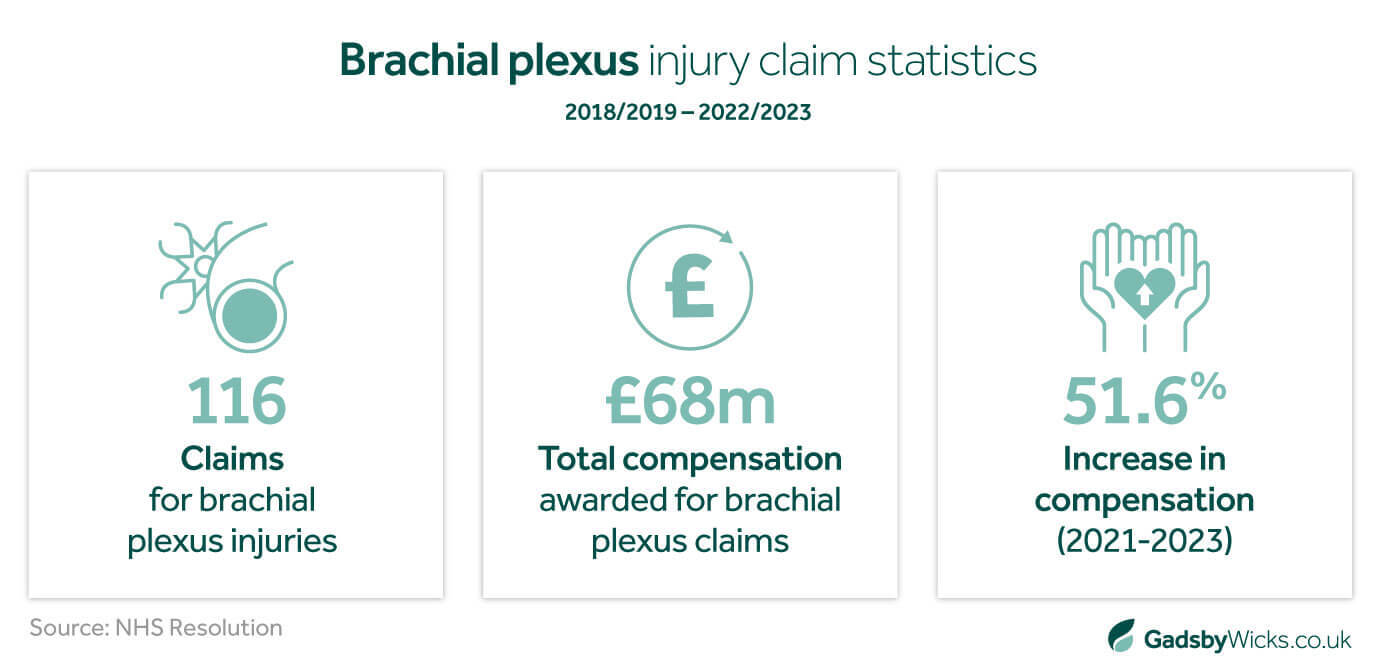
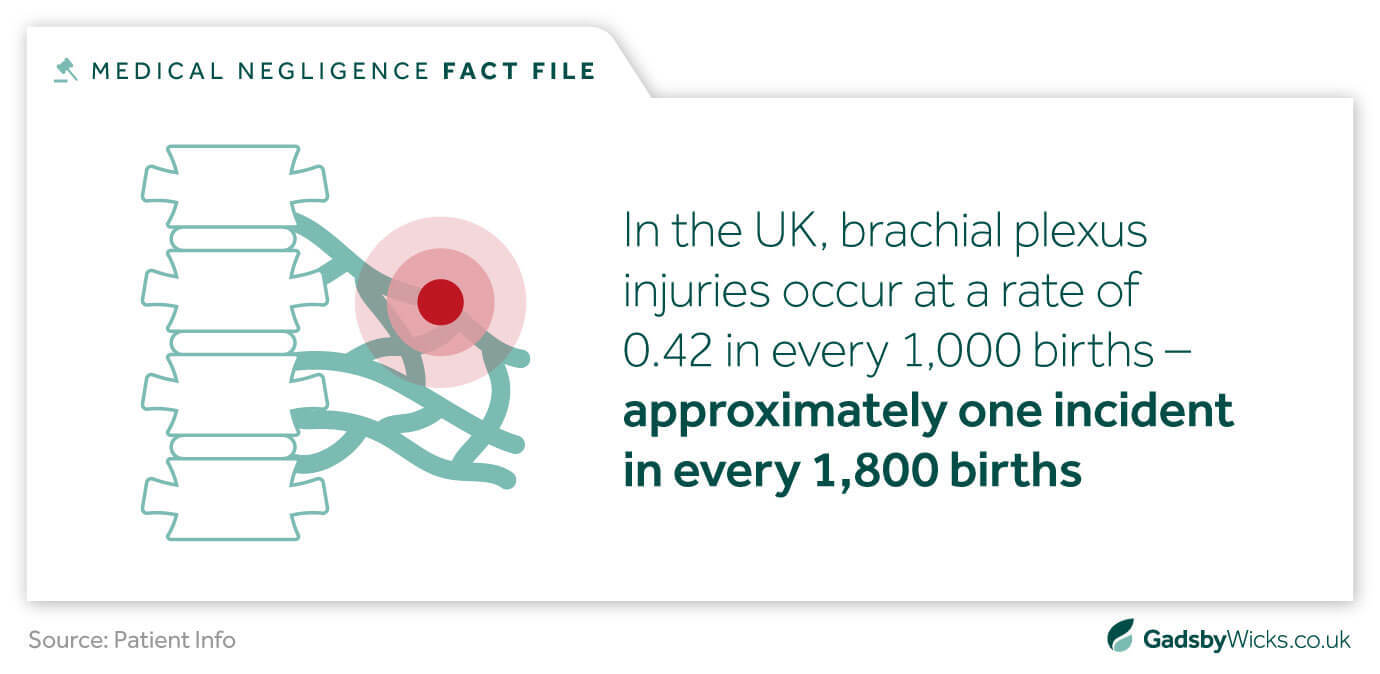
Klumpke’s Palsy is a rare form of brachial plexus injury, so data on compensation values is few and far between. However, data gathered over time by NHS Resolution on other brachial plexus injuries does reveal the following:
- There were 656 claims arising from Erb's Palsy closed between 2001/02 and 2020/21
- The 116 Erb’s Palsy claims closed between 2018/19 and 2022/23 recovered close to £68 million in compensation – an average of approximately £586,000 per claim
- There was a 51.6% increase in compensation paid for 2022/23 Erb’s Palsy claims compared to 2020/2021 figures, despite there being 5 fewer claims that year (23 vs 18)
These figures indicate that while brachial plexus injury claims, including Klumpke’s Palsy claims, are rare, they are among the most valuable types of claims. Furthermore, the compensation awarded for these claims has increased in recent years (although they still vary greatly from case to case).
This aligns with our data on birth injury to baby claims in Essex and East Anglia. Just 11% of our total medical negligence claims in 2025 are classified as birth injury claims, yet they account for a substantial 42% of estimated claim value.
It is not especially surprising, as injury to baby claims are most likely to have lifelong implications on their development and opportunities, leading to larger compensation awards for this lifelong care.
For example, there have been cases worth over £1.5 million for negligence during birth leading to brachial plexus injuries.
However, it is important to clarify that the scope for Klumpke’s Palsy compensation is very wide. For every multi-million pound claim, there are many more lower-value claims.
At Gadsby Wicks, our solicitors have extensive experience handling complex Klumpke’s Palsy claims. Together, we pursue the maximum compensation possible to help safeguard your child’s independence, quality of life and long-term future.
How is Klumpke’s Palsy compensation calculated?
When calculating Klumpke’s Palsy compensation, we divide it into two main areas: general damages and special damages.
General damages for Klumpke’s Palsy claims
General damages are compensation for physical and psychological harm caused by the negligent treatment, also called “pain, suffering and loss of amenity”.
When calculating general damages, we may refer to the Judicial College Guidelines, which provide guideline values for different types of injury, including:
- Injuries involving paralysis
- Arm, wrist and hand injuries
- Chronic pain
- Psychiatric and psychological injuries
In the table below, we have referenced some JCG figures related to Klumpke’s Palsy claims. Remember that these are only estimates – Klumpke’s Palsy compensation must always be calculated on a case-by-case basis.
For this reason, it is essential to instruct specialist birth injury solicitors. We evaluate every claim on an individual basis, ensuring that any general damages awarded reflect the specific physical and emotional impact of the injury, as well as each client’s personal circumstances.
| Severity | Estimated Value Range | Notes |
|---|---|---|
| Arm injuries | ||
| Severe | £117,360 - £159,770 | Injuries fall short of amputation, but leave the patient little better than if the arm had been lost (e.g. serious brachial plexus injuries). |
| Moderately severe | £47,810 - £73,050 | Significant permanent residual disability whether functional or cosmetic. |
| Less severe | £23,430 - £47,810 | Significant disabilities, but a substantial degree of recovery will be expected. |
| Wrist injury | ||
| Severe | £58,110 - £73,050 | Injuries resulting in complete loss of function in the wrist. |
| Moderately severe | £29,900 - £47,810 | Injury resulting in significant permanent disability, but where some useful movement remains. |
| Less severe | £15,370 - £29,900 | Less severe injuries where these still result in some permanent disability. |
| Minor injury | £7,420 - £12,630 | Where recovery from soft tissue injury takes longer than 12 months, but is largely complete |
| Hand injury | ||
| Severe injury | £68,070 - £103,200 | Permanent cosmetic disability and significant loss of function. |
| Moderately severe | £35,390 - £75,550 | Injuries that reduce the hand to about 50% capacity, such as gross diminuition of grip and dexterity. |
| Chronic pain disorders | ||
| Severe | £51,410 - £76,870 | Significant, ongoing symptoms despite treatment, adversely impacting ability to work and requiring care/assistance. |
| Moderate | £25,710 - £46,970 | Symptoms are ongoing, albeit to a lesser degree than the above and a less marked difference on daily life. |
Special damages for Klumpke’s Palsy claims
Special damages cover the past and future financial losses caused by the claimant’s Klumpke’s Palsy. These may include:
- Medical treatment and rehabilitation: long-term physiotherapy, pain management and surgical procedures
- Care and support needs: ongoing care services, either provided by professionals or family members
- Loss of future income: compensation for any future lost wages (based on the claimant’s parents)
- Equipment, housing, and transport requirements: medical aids, home modifications and adapted vehicles
- Associated expenses: travel costs for medical appointments and rehab sessions
Special damages frequently account for the greatest variation in compensation in Klumpke’s Palsy claims, as the amounts involved depend heavily on individual circumstances and ongoing care or equipment needs.
As specialist solicitors, we collaborate with experienced forensic accountants, case managers and independent professionals to fully understand the financial impact of an injury, both now and in the future. This allows us to ensure that any special damages awarded are precisely calculated to meet your child’s needs.
What is the average Klumpke’s Palsy claim settlement in Essex?
There is no average settlement value for a Klumpke’s Palsy claim. Every case is different, and compensation reflects the specific circumstances and impact of the injury.
With over 30 years’ exclusive experience in medical negligence, we have secured awards ranging from five-figure sums in cases with limited long-term effects, to substantial settlements where injuries have resulted in permanent, life-changing disability.
We do not rely on averages or assumptions. Each Klumpke’s Palsy claim is assessed on its own merits, ensuring suitable compensation for therapy and future care.
Should I use a Klumpke’s Palsy compensation calculator?
Online calculators for Klumpke’s Palsy claims exist, but they can be misleading and are often designed more to generate enquiries than provide reliable guidance.
With decades of experience handling medical negligence claims across Essex, East Anglia and the UK, we know that a true estimate can only be made after meeting you in person and reviewing all relevant evidence.
We prioritise honesty and accuracy, never making promises we cannot keep. Every Klumpke’s Palsy claim is unique, so we take the time to understand your child’s injury, circumstances and its impact before providing a realistic assessment of your claim’s value.
What can Klumpke’s Palsy compensation pay for?
Klumpke’s Palsy compensation can cover a wide range of treatments, aids and equipment to support your child’s future, including (but not limited to):
- Compensation for pain and suffering
- Loss of future earnings
- Rehabilitation and physiotherapy
- Surgical procedures
- Mobility aids and medical equipment
- Necessary adaptations to homes and vehicles
- Lifetime care costs
- Psychological support
What does our Klumpke’s Palsy claims process look like?

A free initial consultation
Call us, request a callback or complete our online form and we’ll assess if you have a valid medical negligence claim.

Funding your claim
Discover the ways we can fund your claim without you paying a penny at any stage of the process.

Investigating evidence
We gather medical records, witness statements and more to learn what happened to you and prove your claim.

Instructing independent medical experts
We work with impartial, experienced medical experts to establish whether your injuries were due to substandard medical care.

Valuing your claim
We assess your health and financial losses to accurately estimate how much compensation your claim is worth.

Presenting your case
We contact the Defendants and the Courts on your behalf to set out your allegations and receive a response.

Negotiating a settlement
We work to achieve a fair settlement for you outside the courtroom – this is how 96% of our cases end.

Preparing for Trial
If we must proceed to Trial, we fully prepare you for what to expect so you receive the right result in court.
FAQs about Klumpke’s Palsy claims
What is Klumpke’s Palsy?
Klumpke’s Palsy, also known as Klumpke’s Paralysis or Dejerine-Klumpke Palsy, is a lower brachial plexus injury to the C8-T1 nerve roots in the neck and shoulder.
Klumpke’s Palsy affects the lower arm area, causing limpness or lack of sensation in the forearm, wrist and hand. In mild cases, this can result in tingling, weakness or pain in these regions. In the most extreme cases, patients may suffer complete paralysis in their lower arms.
Another common symptom of Klumpke’s Palsy is something known as claw hand (ulnar claw), a deformity where fingers bend inward towards the palm, resembling an animal's claw. Patients may also experience Horner’s syndrome – a drooping eyelid on the affected side.
It is often confused with Erb’s Palsy, another brachial plexus injury. Klumpke’s Palsy affects the lower arm, while Erb’s Palsy affects the upper arm and shoulder.
What parts of the arm does Klumpke’s Palsy affect?
Klumpke’s Palsy affects the lower arm areas, most notably the forearm, wrist and hands. Depending on the severity of the injury, this can impact a person’s grip, fine motor skills and sensation in these areas.
If your child’s arm mobility and function have been affected in this way, and it could have been avoided with better quality care, contact our experienced birth injury negligence solicitors for advice.
What causes Klumpke’s Palsy in newborns?
Klumpke’s Palsy is caused by stretching, tearing or compression of the C8-T1 brachial plexus nerves during childbirth. This is often the result of extreme traction on the child’s outstretched arm during a difficult or traumatic birth.
Examples of traumatic birth situations that may cause Klumpke’s Palsy include:
- Shoulder dystocia, where the shoulder gets stuck behind the mother's pubic bone after the head is delivered – when managed incorrectly, this can cause the neck, shoulders and arms to be stretched during delivery
- Breech delivery, where the baby is born feet-first, increasing the risk of shoulder or neck traction
- Instrumental delivery, involving the use of forceps or ventouse to assist birth
- Hyper-abduction, when a baby’s arm is pulled upward and outward through the course of delivery
For more information, please read our guide on what you need to know about shoulder dystocia.
Outside of a traumatic birth, other potential causes of Klumpke’s Palsy in newborns include tumours and inflammation among the brachial plexus nerves.
Furthermore, factors that can increase the likelihood of Klumpke’s Palsy in labour include:
- Large baby (macrosomia)
- Prolonged labour
- Diabetes in the mother
- Small maternal size
Sometimes, these circumstances arise due to negligent treatment by obstetricians, midwives and other healthcare professionals involved in a child’s birth.
If this affected your child and caused their injuries, speak to our experienced obstetric brachial plexus injury solicitors to pursue their claim.
Is Klumpke’s Palsy always caused by medical negligence?
No, Klumpke’s Palsy is not always caused by medical negligence. During highly traumatic or difficult births, brachial plexus injuries can occur despite the professionals involved taking reasonable and proper care of the mother and baby.
In addition, factors such as the size of the baby and length of delivery can increase the likelihood of Klumpke’s Palsy regardless of the standard of care.
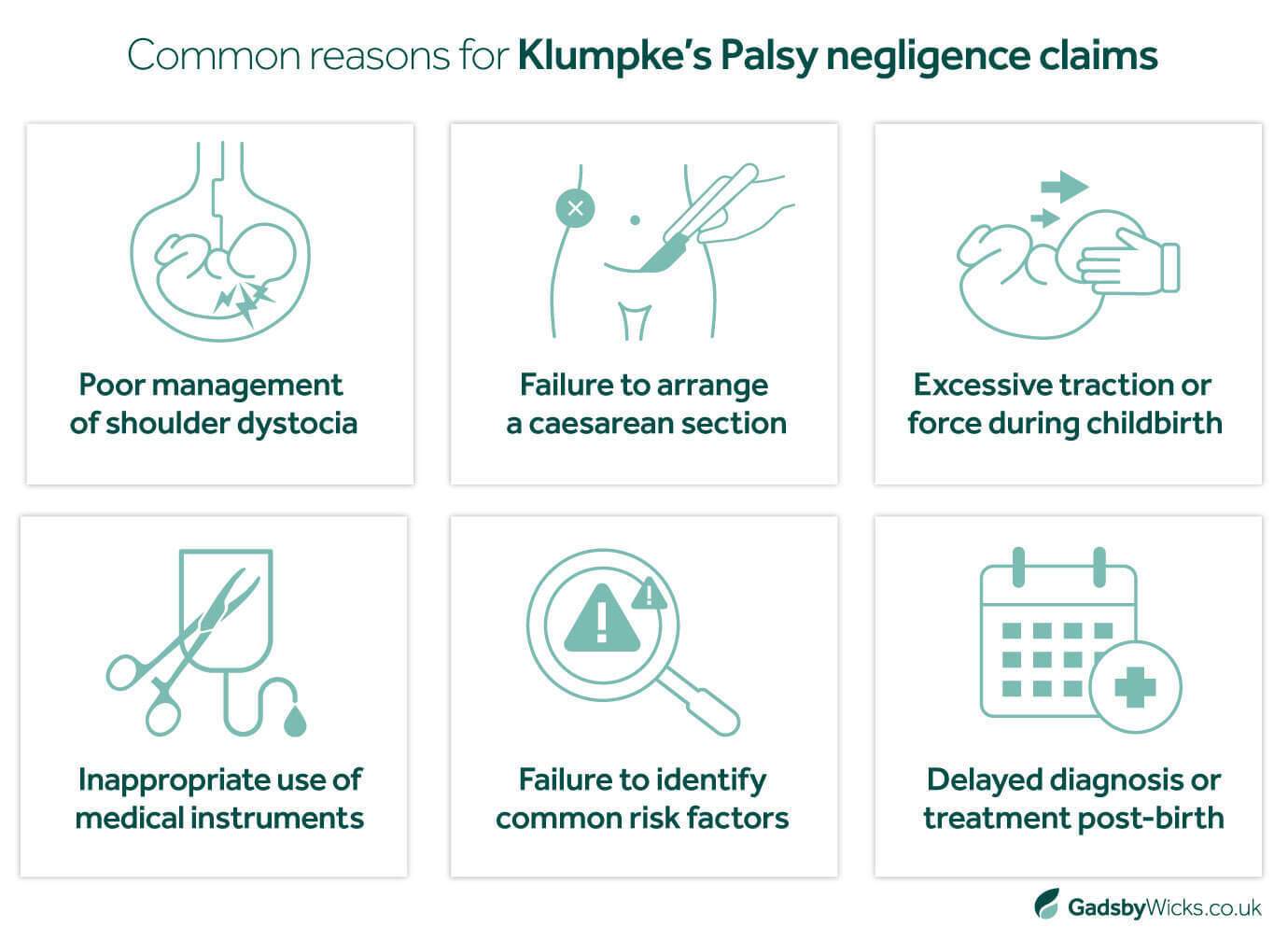
Examples of situations where negligence is the likely cause of Klumpke’s Palsy include:
- Mismanagement of shoulder dystocia or other problems during delivery
- Failure to arrange a caesarean section for a high-risk birth
- Excessive force was used during delivery
- Inappropriate use of forceps or ventouse during delivery
If any of the above impacted your child’s birth, then your child may have a valid Klumpke’s Palsy negligence claim. Contact our specialist obstetric negligence solicitors for more information.
What are the signs and symptoms of Klumpke’s Palsy in babies?
Common signs and symptoms of Klumpke’s Palsy include:
- Muscular atrophy in the forearm and/or hand
- Hand and wrist weakness/paralysis
- Reduced range of motion in the arm
- ‘Claw hand’ (ulnar claw)
- Limpness or paralysis in the lower arm region
- Stiffness in wrist or hand joints
- Ongoing numbness or pain in the arm and/or hand
- Horner’s syndrome (drooping of the eyelid on the affected side)
The scope of Klumpke’s Palsy symptoms ranges from mild and subtle, to severe and noticeable. In most cases, the right arm is the most likely to be affected by Klumpke’s Palsy.
How is Klumpke’s Palsy diagnosed?
To diagnose Klumpke’s Palsy, a doctor should perform a physical examination and conduct diagnostic tests, which may include:
- Electromyogram (EMG): A test that measures the electrical activity of a muscle in response to a stimulus
- Imaging studies: Internal imaging of the arm, wrist or hands, such as x-rays, MRIs and ultrasounds
- Nerve conduction studies: Sending electrical signals between the spinal cord and muscles to test the effectiveness of a nerve
Early diagnosis and specialist referral of Klumpke’s Palsy can often be the difference between a full recovery from the condition in a matter of months, to a lifelong disability.
If your child’s Klumpke’s Palsy was misdiagnosed or there was a delay in diagnosis, and you believe that caused their condition to worsen, speak to our solicitors for advice on the next steps.
Contact our expert Klumpke’s Palsy claims solicitors
If your child’s Klumpke’s Palsy was caused by negligence during childbirth, our team is here to listen and advise you on your next steps.

Lexcel accredited medical negligence claims solicitors
We are proud to be a Lexcel-accredited practice. The accreditation is a mark of quality and comes directly from the Law Society.
A recent assessment described us as a “Centre of Excellence” and we continue to operate to the highest standards across all main areas of our field. These include client care, case management, financial management, structure and strategy, people management, risk management, information management and file management.



Industry Recognised