
 Back to top




- No win. No fee.
- No hidden costs
- 100% risk-free, only pay if you win
- Home >
- Insights >
- Birth Injuries >
- Group B Strep in pregnancy and newborns: How dangerous is a missed diagnosis?
About the Author

Jessica Wright
Medical Negligence Solicitor - LLB (Hons) Anglia Ruskin University
Read more about Jessica »The birth of a child should be one of life’s most joyful moments. But it is also a time when parents trust the professionals around them to keep their child safe – and when mistakes can have devastating consequences.
Among the most serious of these risks is infection. A mother can carry a virus or bacteria that, while doing no harm to them, could place their newborn’s life and long-term health in jeopardy.
Group B Streptococcus (GBS) is the most common cause of severe infection in babies in their first week of life. While most cases are treated quickly and effectively, sometimes a missed or delayed diagnosis results in a much worse outcome than there should have been.
Here, we explain what GBS is, the dangers it poses to pregnant mothers and newborns, and how to make a claim if negligent care affected you or your baby.
The risks of Group B strep in pregnancy and childbirth
What is Group B Streptococcus GBS?
Group B Streptococcus (GBS), often shortened to Group B strep, is a common, usually harmless bacterium that up to 40% of adults in the UK carry. It is estimated that around 20% of adult women have GBS in their vagina or rectum.
Because Group B strep is usually harmless, most adults who carry this bacterium likely have no idea that they have it.
However, GBS can become dangerous in pregnancy if it is allowed to pass from the mother to their child, as their immune systems are underdeveloped.
How can Group B strep pass from mother to baby?
A baby can become infected with Group B strep either in their mother’s uterus (womb) or during childbirth. Because GBS bacteria often reside in the vagina or rectum, there is a notable risk of it being contracted by a foetus or newborn.
As mentioned earlier, early-onset GBS is the most common cause of severe neonatal infection, affecting 1 in 1,750 pregnancies each year. This makes it critical for any signs of GBS to be carefully managed in pregnancy and delivery, to minimise the risks to the baby.
Who is at greatest risk of GBS?
While any newborn can contract GBS if their mother carries the bacteria, major GBS risk factors in labour and pregnancy include:
- Babies born prematurely (before 37 weeks of pregnancy)
- Mothers with a fever before or during labour (sign of infection)
- Mothers known to be carriers of GBS
- Previous children diagnosed with GBS
- Birth occurred over 18 hours after the mother’s waters broke
In these circumstances, it is especially important that healthcare providers take care to screen the mother for GBS before giving birth, and to closely monitor the newborn for signs of infection.
Early-onset vs late-onset GBS infections
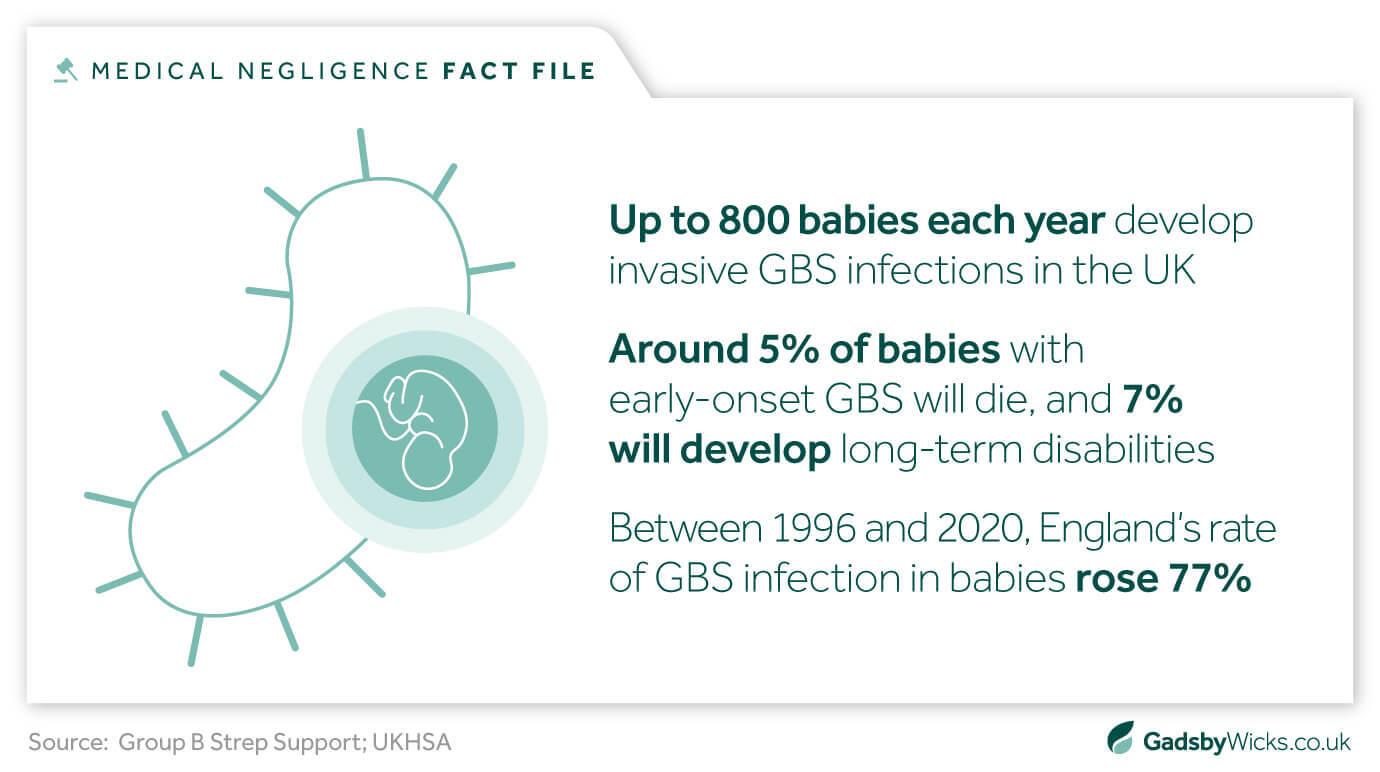
Early-onset neonatal GBS infections occur within a week of a baby’s life, and affect around 4 in every 10,000 live births. In most cases, babies with early-onset GBS will show strep B symptoms within 12 hours of birth, including:
- Being floppy and unresponsive
- Grunting when breathing or struggling to breathe
- Very fast or slow breathing
- An unusually high or low temperature
- Changes in skin colour or developing blotchy skin
- Poor feeding or vomiting milk
- An abnormal heart rate
- Low blood pressure or blood sugar
- Irritability
These symptoms should prompt immediate diagnosis and treatment to best protect the baby’s health and wellbeing.
In rarer cases (2.4 in every 10,000 live births), a baby may sustain a late-onset GBS infection between 7 days and 90 days after birth. Late-onset GBS can be harder for parents to spot at home, as symptoms may appear more gradually. But they can escalate quickly into serious complications, including sepsis and meningitis. Again, prompt, decisive treatment is key to minimise the risk of serious injury.
Can expecting mothers be affected by Group B strep in pregnancy?
Most pregnant women with GBS will not experience any symptoms. However, if the mother is immunocompromised or similarly susceptible, GBS can lead to health complications such as:
- Sepsis
- Urinary tract infections
- Pneumonia
- Skin infections
- Bone infections
Healthcare providers should screen for GBS and perform diagnostic tests if patients show signs of infection. Failure to do so could be grounds for a medical negligence claim.
How can a GBS misdiagnosis happen?
GBS bacteria can be diagnosed by screening a mother in the latter stages of pregnancy, and safely treated with antibiotics in labour, known as GBS intrapartum antibiotic prophylaxis (IAP).
In the UK, GBS screening is not routine. The GBS3 trial is testing the value of routine GBS screening in the NHS compared to the current risk-based approach, but at present, hospitals will not screen patients unless there is a sufficiently high risk of GBS.
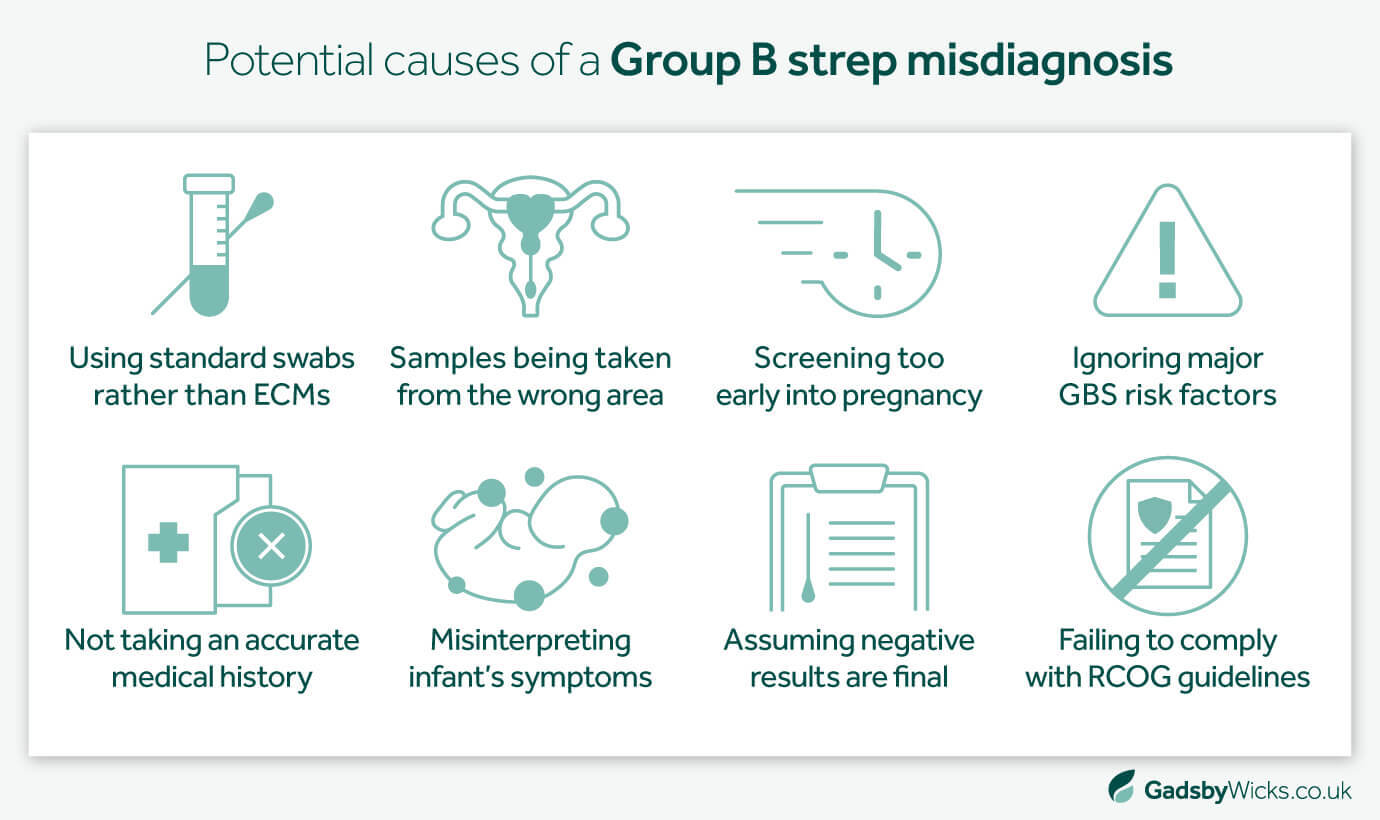
Even when screening does take place, errors and oversights can still lead to a missed or delayed diagnosis. These can include:
- Using standard "non-selective" swabs when screening, rather than the more reliable enriched culture methods
- Samples being taken from the wrong areas, such as missing the lower vagina or rectum
- Screening too early during pregnancy for an accurate result (screening should ideally take place between 35 and 37 weeks of pregnancy)
- Ignoring major GBS risk factors, such as prolonged rupture of membranes (water breaking), the mother having a fever, or a previous baby born with GBS
- Failing to inform the mother fully about the risks of GBS
- Delaying antibiotic treatment for mothers at risk of early-onset GBS infection in labour
- Failing to inform the mother or report positive GBS test results
- Failing to comply with RCOG Green-top Guideline 36, the guide for the prevention of early-onset Group B strep
Furthermore, poor monitoring of the baby in the hours following birth for signs of GBS, such as reluctance to feed, floppiness or breathing irregularities, can also lead to a misdiagnosis or delayed treatment.
The above situations can form the basis of a GBS negligence claim if they result in greater harm to the mother or baby than there should have been. If any of this sounds familiar, start your claim today to explore your options.
Who can be responsible for a GBS misdiagnosis?
Any healthcare provider or maternity professional who owes a duty of care to their patients can be responsible for a Group B strep missed diagnosis, including (but not limited to):
- Midwives
- Obstetricians
- GPs
- Hospital maternity units
- Neonatal teams
Responsibility for a GBS misdiagnosis may also be shared across multiple parties.
What is the impact of a Group B strep missed diagnosis?
A missed or delayed diagnosis of Group B strep can have devastating consequences for a newborn and their families.
According to research by Group B Strep Support (GBSS), approximately 5% of babies with early-onset GBS will die, which rises to 8% for late-onset cases. Of those who survive an early-onset GBS infection, over 7% will have a long-term physical or mental disability (12% for late-onset GBS).
These stark figures demonstrate just how severe the consequences of GBS can be for a baby, mother and their loved ones, even when everything is handled correctly. When a misdiagnosis delays treatment, the chances of a poor outcome can increase dramatically.
Impact of a GBS misdiagnosis on the baby
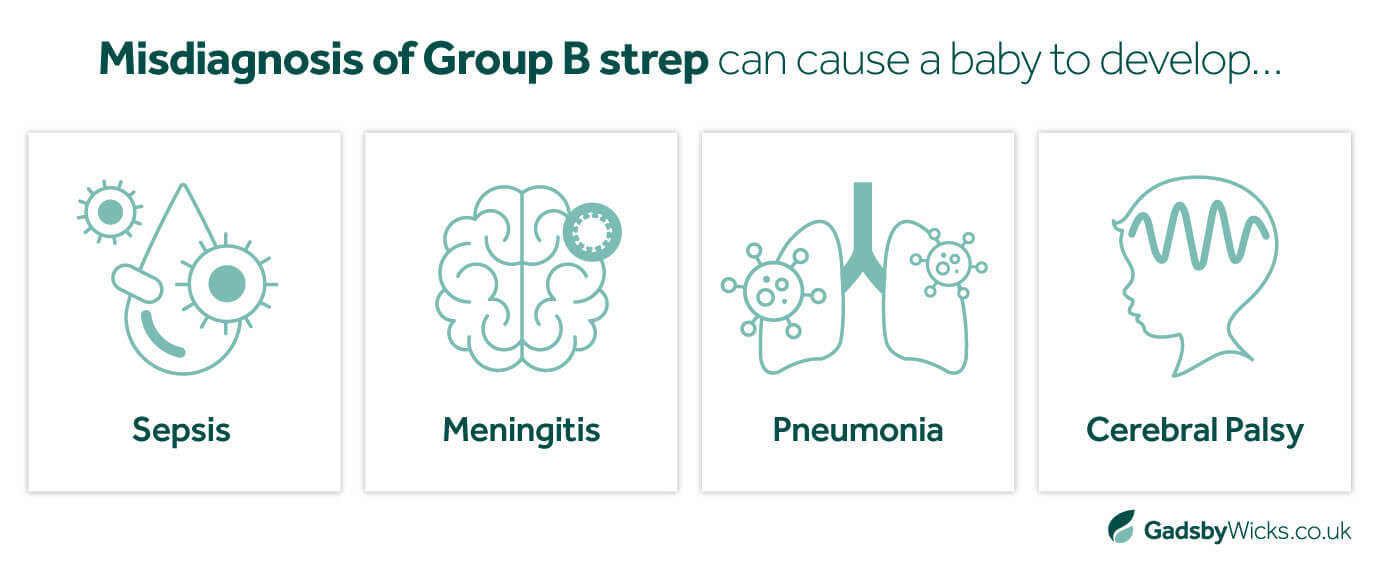
GBS infections can spread rapidly in a newborn in the hours and days following birth, leading to life-threatening complications such as:
- Neonatal sepsis and septicaemia (blood poisoning)
- Meningitis
- Pneumonia
- Neonatal brain damage, leading to disabilities such as Cerebral Palsy
- Cognitive, motor and behavioural disabilities
In the most tragic circumstances, a Group B strep misdiagnosis can result in stillbirth or neonatal death of the baby.
As well as the physical injuries sustained by the baby, the psychological toll on parents and the wider family can be immense. Coming to terms with the long-term disability or loss of a child brings grief that no family should face alone.
These life-changing ramifications mean that any instance of misdiagnosis or delayed diagnosis deserves to be investigated, so that those affected receive the answers and compensation they need to support their family’s future.
How do I make a Group B strep negligence claim?
If mistakes in the diagnosis, monitoring or treatment of Group B strep led to a poor outcome for your baby, you have the right to pursue a birth injury claim.
We appreciate how difficult it can be to revisit what happened, particularly when you are trying to cope with the emotional impact on you and your family. Our specialist birth injury solicitors not only investigate whether your care fell below an acceptable standard, but also support you through the claims process with empathy, honesty and clear advice.
When you contact us, we will arrange a free, confidential chat with an experienced nurse adviser, who will listen to your concerns and talk through what happened. If we believe there are grounds for a claim, we will assign a dedicated solicitor to guide you through the process.
Supporting you at every step with care and compassion, we will fight your corner to explain what went wrong, and recover a settlement that protects your family’s financial future.
How do you prove a GBS negligence claim?
To prove you have a GBS negligence claim, we must answer three key questions:
- Did your healthcare provider breach their duty of care to you or your baby?
- Did you or your baby suffer pain, injury or loss?
- Did the breach of duty directly cause you or your baby’s injuries? (causation)
For a claim to be successful, you must meet all three of these criteria. As highly experienced birth injury lawyers, we will meticulously investigate all available evidence to determine if your claim is valid, including:
- Medical records
- Witness statements
- Complaints correspondence
- Independent medical expert reports
Is there a time limit to make a GBS negligence claim?
In most medical negligence cases, there is a three-year limitation from the date of injury (or Date of Knowledge) to make a claim.
However, claimants under the age of 18 have until their 21st birthday to make a GBS negligence claim. Furthermore, if the claimant lacks mental capacity due to a brain injury or neurological disability, there is no time limit.
How long can a GBS negligence claim take to settle?
A GBS negligence claim, like numerous other birth injury claims affecting babies, will typically take much longer than other claims to reach a final settlement.
This is because in cases where the child has sustained a long-term injury or disability, such as Cerebral Palsy, we would likely need to wait several years to see how much their injuries affect their capabilities and development.
However, with our 30+ years of experience in birth injury claims, we guarantee to manage your claim as efficiently as possible. We never rush your claim, because the right outcome is more important than a quick outcome.
How much compensation can I recover in a GBS negligence claim?
The compensation awarded in a GBS negligence claim depends on the severity of the injuries sustained by the claimant and the long-term impact on their life.
At Gadsby Wicks, we have represented Cerebral Palsy claims worth up to £26 million when lives have been altered by brain injuries sustained before or during birth. Because every case is different and every family's circumstances are unique, compensation is always calculated on an individual basis.
Medical negligence compensation is split into two key areas:
- General damages: For the claimant’s pain, suffering and loss of amenity
- Special damages: For past, present and future financial losses
In cases of GBS negligence, factors that could influence the compensation recovered include:
- Long-term care and case management costs
- Adaptations to the home or vehicles
- Ongoing medical treatments, therapies and medications
- Loss of future earnings and lost years’ damages
- Purchasing medical aids and equipment
- Travel expenses
Through our investigations, we will offer a clear estimate of the expected settlement and keep you updated throughout our negotiations with the defendants.
Was your family affected by Group B strep in pregnancy?
No child should suffer because of a preventable oversight or mistake. If your baby was injured or worse because a GBS infection was missed or mismanaged, you deserve answers, compensation and justice.
At Gadsby Wicks, we understand that legal action may be the last thing on your mind when trying to cope with what has happened to your family. We take the weight of the process off your shoulders, handling everything with the care, sensitivity and expertise your situation demands.
As the only specialist medical negligence firm in Essex and East Anglia, with over 30 years of experience in birth injury claims, we have helped many families in your position find closure and financial security in the most challenging circumstances.
- Over 5,000 clients represented and over £300 million recovered in compensation
- Our solicitors are accredited by The Law Society, APIL, AvMA and more reputable industry bodies
- 96% of our claims settle without needing to enter a courtroom
- We work on a ‘no win, no fee’ basis, so you pay nothing at any stage of the process
Start your claim today to discover what went wrong, or contact us directly to discuss your situation.
Disclaimer
All content contained within this article is meant for general information only – this should not be treated as a substitute for medical advice from your doctor or another healthcare provider. If you require legal advice specific to your situation, please contact our team directly.
Gadsby Wicks is not liable for any diagnosis made from the content of this article, nor does it endorse any service or external site linked to within the article.
Always consult your GP if you are concerned about your health and wellbeing, or speak to us if you require legal advice.
Do you have a negligence claim?
Meet our medical negligence claims solicitors
Related Insights


Birth Injuries