

 Back to top





Medical Negligence

Medical Negligence Solicitor and Partner - LLB (Hons) University of Mid-Glamorgan
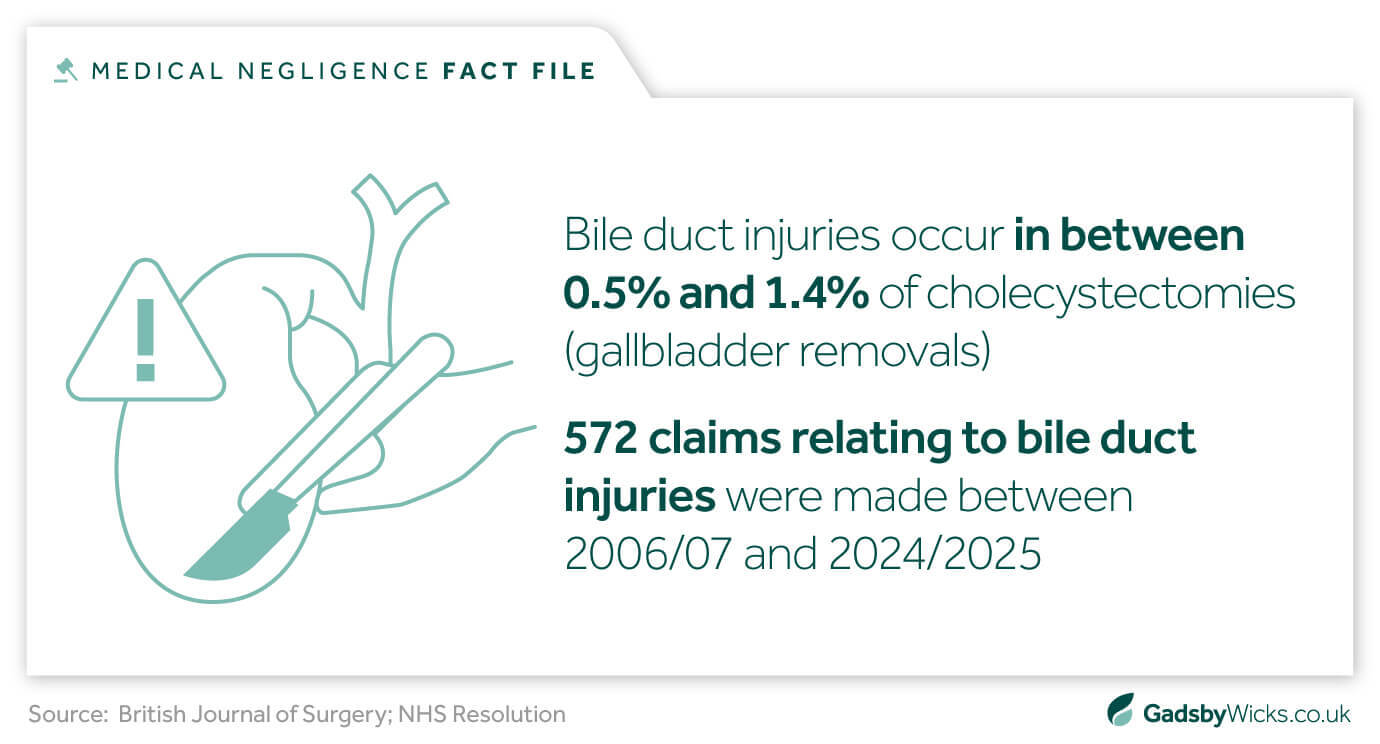
Read more about Tony »Bile duct injuries are the most common complications during cholecystectomy (gallbladder removal) procedures, occurring in up to 1.4% of these surgeries.
It is also one of the most serious complications. Damage to the bile duct can lead to leaks and obstructions, causing issues ranging from liver damage and vascular injuries, to life-threatening infections and the need for major reconstructive surgery.
Here, we’ll explain what the bile duct does, how it can be injured, and what steps you can take if you believe a bile duct injury was caused by surgical negligence.
Bile ducts are canals that carry bile between different organs in the digestive system. Bile is necessary to break down fats and proteins when digesting food.
Bile ducts form part of the biliary system or biliary tree – the overall network of tubes that carry bile from the liver and gallbladder into the small intestine. The main bile ducts in this network include:
The common bile duct – the largest of the body’s bile ducts – is formed where the cystic duct joins the common hepatic duct. It is the final pathway for bile to reach the small intestine, usually merging with the pancreatic duct.
It is important to note that bile is a strong acid. If bile leaks from a duct, it can cause severe damage to organs that are not designed to interact with it.
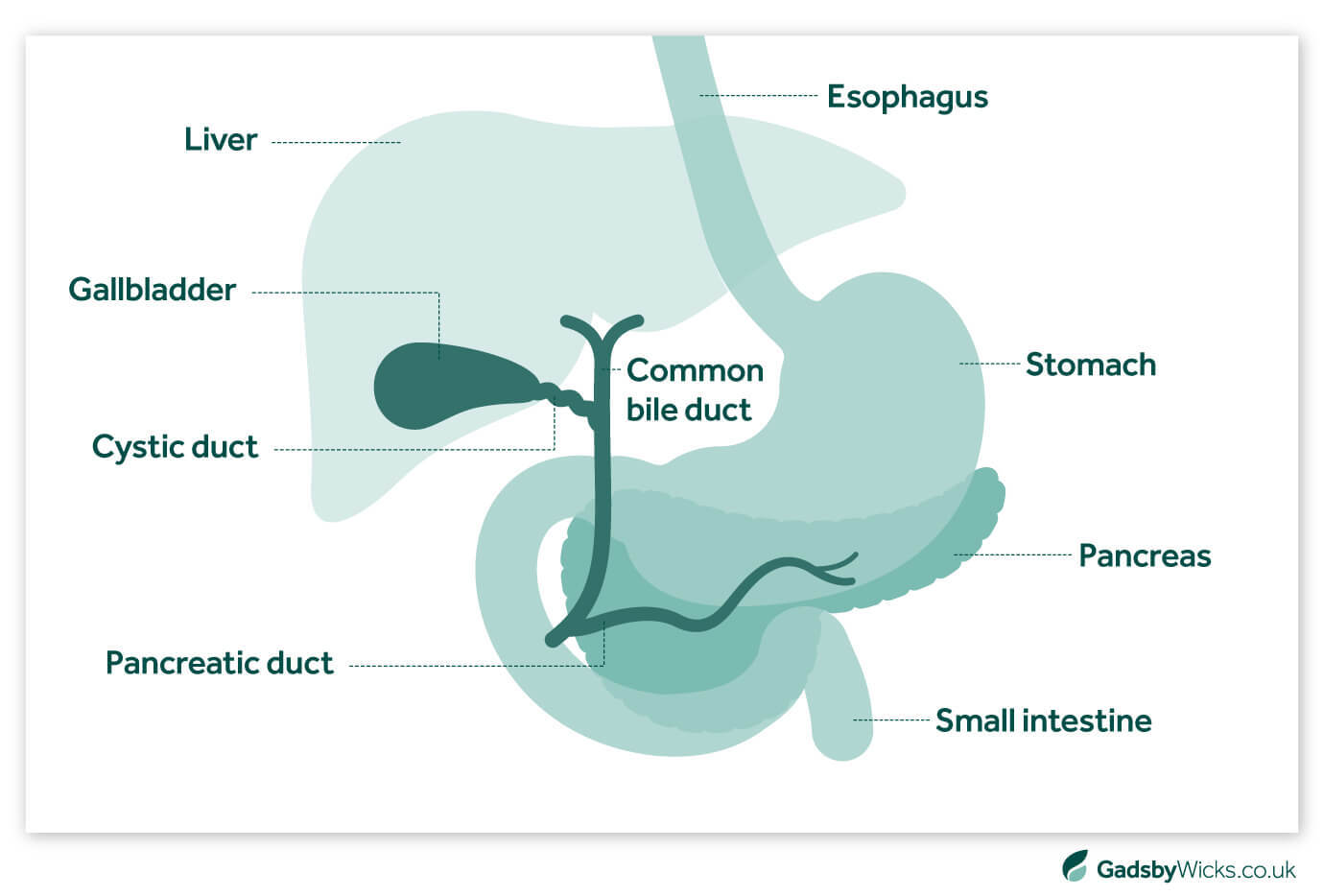
The most widely recognised types of bile duct injury include (but are not limited to):
Depending on the nature and severity of a bile duct injury, it can have dangerous consequences for those affected, including:
Typical signs and symptoms of bile duct injuries include:
Bile duct injury symptoms need to be identified early, especially following abdominal surgery, to minimise the risk to the patient.
As mentioned earlier, bile duct injuries are the most common complications in laparoscopic cholecystectomy procedures, also known as gallbladder removals.
Injuries usually happen when the surgeon misidentifies the anatomy, mistaking the common bile duct for the cystic duct.
However, a bile duct injury can occur during other abdominal procedures, including:
During these procedures, poor surgical technique around the bile duct, or failure to promptly identify problems and resolve them, can cause injuries and more serious complications.
Because bile duct injuries are a recognised risk during abdominal surgeries such as gallbladder removals, not every instance of these occurring is due to negligence.
There may be mitigating reasons for surgeons mistaking the bile duct for the cystic duct during surgery, such as:
However, data from NHS Resolution reveals that between 2006/07 and 2024/25, there were 572 claims made relating to bile duct damage – with nearly a quarter of these received in the final five years.
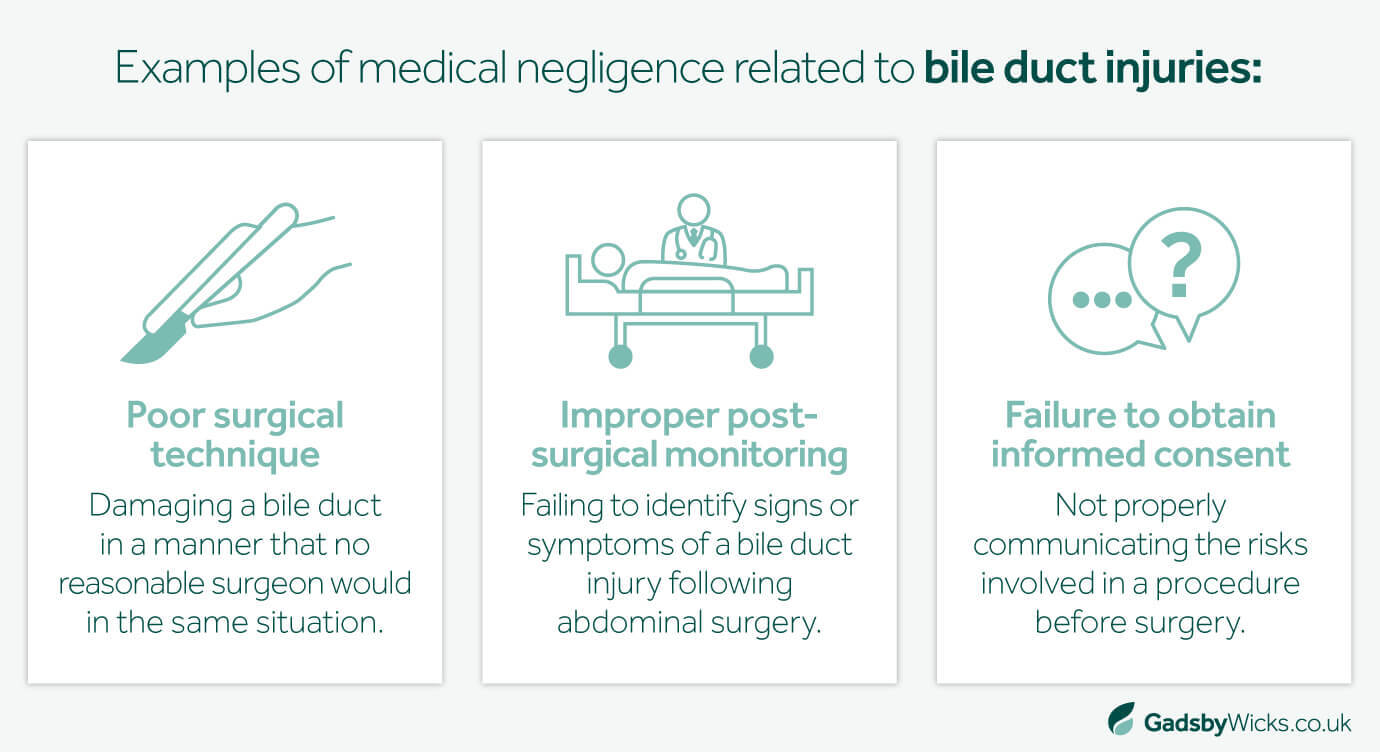
For example, one of our former clients suffered a bile duct injury when their surgeon clipped their common hepatic duct rather than their cystic duct. Not only did this prevent our client’s intended gallbladder removal from happening, but it required her to undergo further open reconstruction surgery to repair the injured bile duct.
Another former client was not adequately informed of the risk associated with ERCP procedures – an unnecessary treatment based on her symptoms. Consequently, our client’s bowel and pancreatic duct were pierced, causing her to undergo future surgeries and suffer lifelong kidney problems.
Proving that your bile duct injury was caused by negligent treatment starts by asking three critical questions:
You must prove all three elements for a claim to be successful.
As highly experienced clinical negligence solicitors, we will examine all available evidence and speak to relevant experts to determine if your surgeon failed to meet an acceptable standard of care, and if this was directly responsible for the injuries you sustained.
Typical evidence we will use to prove your bile duct injury claim includes:
The time limit to make a medical negligence claim is three years from the date of the injury, or from the Date of Knowledge (when someone should have been aware that they had sustained an injury).
There are exceptions to the three-year limitation period:
If you believe you or someone you love has a gallbladder surgery claim, we advise you to start your claim as soon as possible. This ensures that evidence and people’s memories are as fresh as possible during investigations, increasing the chances of a correct outcome.
There is no fixed answer to this question, as compensation is calculated on a case-by-case basis, influenced by factors such as:
In our specific experience, we have managed bile duct injury claims ranging from £45,000 following a transection of the common bile duct, to £180,000 for wrongful clipping of the bile duct.
While we can’t promise a figure before investigating your case, we do promise to cover all bases to ensure that you recover a settlement that enables you to return to the position you should have been had you received appropriate treatment (insofar as that is possible).
We understand that cost is always a concern when considering a medical negligence claim, but we believe that everyone has the right to justice, regardless of their financial situation.
As “no-win, no-fee” claims solicitors, you pay nothing upfront to access our services, and we only get paid if your claim is successful. If we don’t win your case, you don’t owe us a penny.
Our success fee will be recovered from your final settlement, and you will keep at least 75% of your compensation.
Bile duct injuries can have serious, potentially life-threatening ramifications. When they are the result of avoidable surgical errors, those affected deserve an explanation for what happened, for those responsible to be held accountable, and compensation for their pain and suffering.
Since 1993, our solicitors have helped thousands across Essex and East Anglia recover millions in damages. We treat you and your loved ones with care, respect and compassion, while meticulously investigating every detail and robustly negotiating to secure the compensation, answers and justice you deserve.
Start today by completing our online form, or contact us directly to discuss your surgical negligence claim with our dedicated team.
All content contained within this article is meant for general information only – this should not be treated as a substitute for medical advice from your doctor or another healthcare provider. If you require legal advice specific to your situation, please contact our team directly.
Gadsby Wicks is not liable for any diagnosis made from the content of this article, nor does it endorse any service or external site linked to within the article.
Always consult your GP if you are concerned about your health and wellbeing, or speak to us if you require legal advice.
Related Insights