
 Back to top





Misdiagnosis Claims

Medical Negligence Solicitor and Partner - LLB (Hons) University College London
Read more about Tami »Bowel cancer is one of the most common forms of cancer in the UK, and sadly, also one of the most deadly. Early diagnosis is crucial to a successful, lasting recovery.
In most situations, this is what happens. But when symptoms are overlooked, tests are misinterpreted, or treatment is unreasonably delayed, the consequences can be devastating, for the patient and their family.
If you’re reading this guide, you or someone you love may have suffered due to a bowel cancer misdiagnosis, and you want to know where you stand and what your options are.
Below, we will answer the questions you want answered about making a bowel cancer misdiagnosis claim, and help you understand the condition better.
Bowel cancer, also known as colorectal cancer, is a cancer that affects any part of the large bowel, including the colon and rectum. It often develops from pre-cancerous growths in the area called polyps, although not in all cases.
According to Bowel Cancer UK, bowel cancer (also known as colorectal cancer) is the fourth most common cancer in the UK, with approximately 44,000 people diagnosed with the condition every year. 94% of patients diagnosed are aged 50 or over, but it is possible to develop bowel cancer at any age.
As well as being one of the most common types of cancer, bowel cancer is also the second deadliest. More than 16,800 people succumb to this condition each year, although this number is dropping thanks to better diagnosis and treatment options.
Over 90% of bowel cancers are adenocarcinomas, which start in mucus-producing gland cells of the bowel lining. Other rarer forms of bowel cancer include:
Common symptoms of bowel cancer include (but are not limited to):
In some instances of colorectal cancer, the cancer may cause blockages in your digestive tract. Known as a bowel obstruction, this stops digestive waste from passing through your intestines.
Bowel cancer can affect anyone, but the vast majority of people diagnosed with it are over 50. Men are also slightly more likely to develop colorectal cancer than women (1 in 15 men compared with 1 in 18 women).
Other risk factors associated with bowel cancer are:
When diagnosing, healthcare professionals should ask about these risk factors. Failing to do so could be grounds for a cancer misdiagnosis claim if the patient suffers harm.
If your GP or another healthcare professional suspects bowel cancer, they will usually first conduct a digital rectal examination (DRE) to identify lumps or signs of illness. After this, you may undergo several tests, including:
Today in England, Wales and Northern Ireland, patients aged 50 to 74 are sent faecal immunochemical tests (FITs) every two years. These tests detect hidden blood in the stool, allowing doctors to catch bowel cancer at its earliest stages.
If your GP suspects bowel cancer, they should issue an urgent GP referral – commonly known as a two-week wait referral – ensuring you are seen by a specialist within 14 days.
Early diagnosis of bowel cancer greatly increases the likelihood of successful treatment:
In the majority of circumstances, symptoms of bowel cancer are spotted and tested promptly, giving the affected patient the greatest chance at recovery. However, this is not always the case.
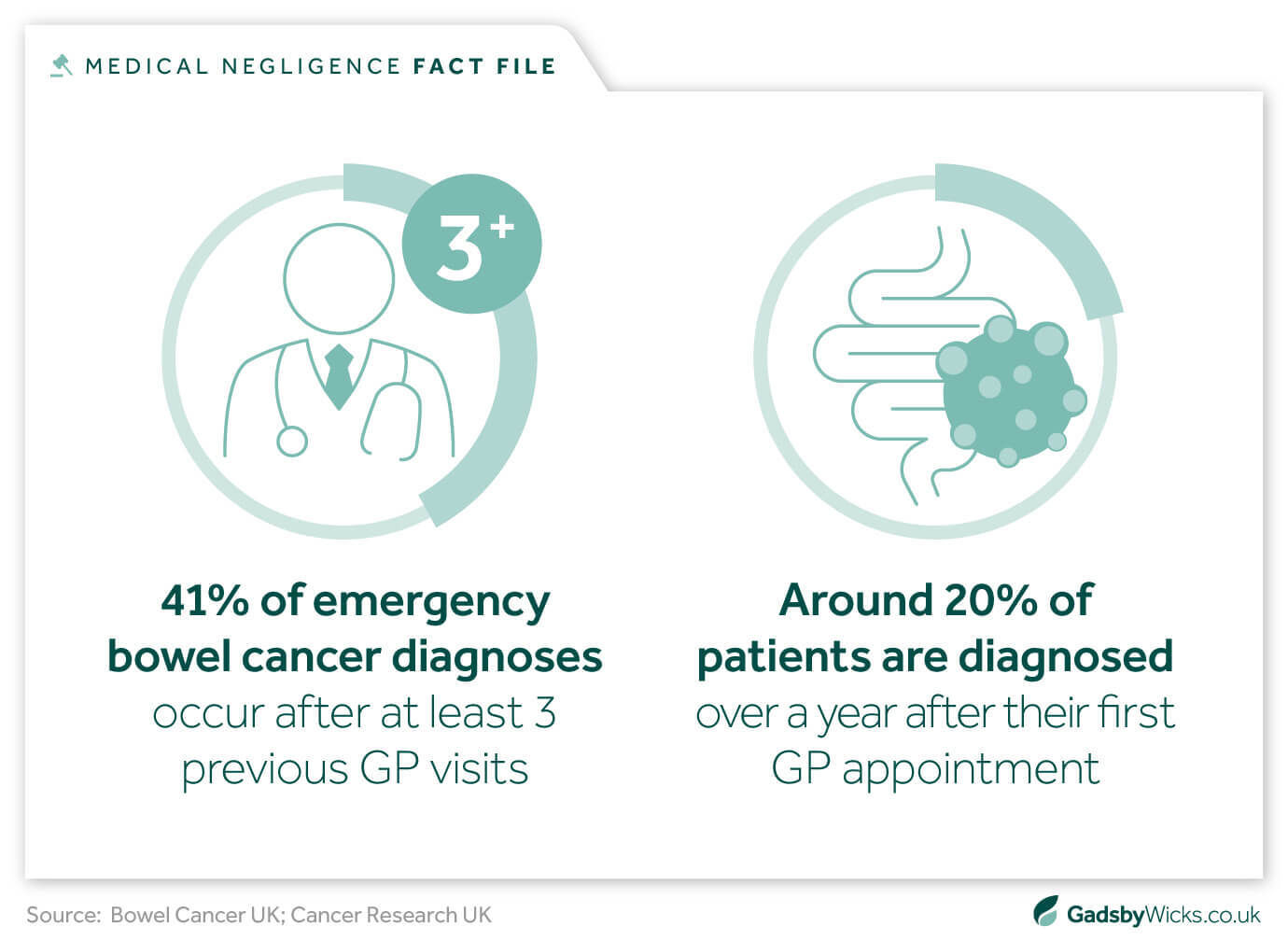
Data from Bowel Cancer UK has demonstrated that 41% of patients who receive an emergency bowel cancer diagnosis were seen at least three times by their GP with similar symptoms. Another report states that for one in five patients, it took over a year from their first GP appointment to be diagnosed with bowel cancer.
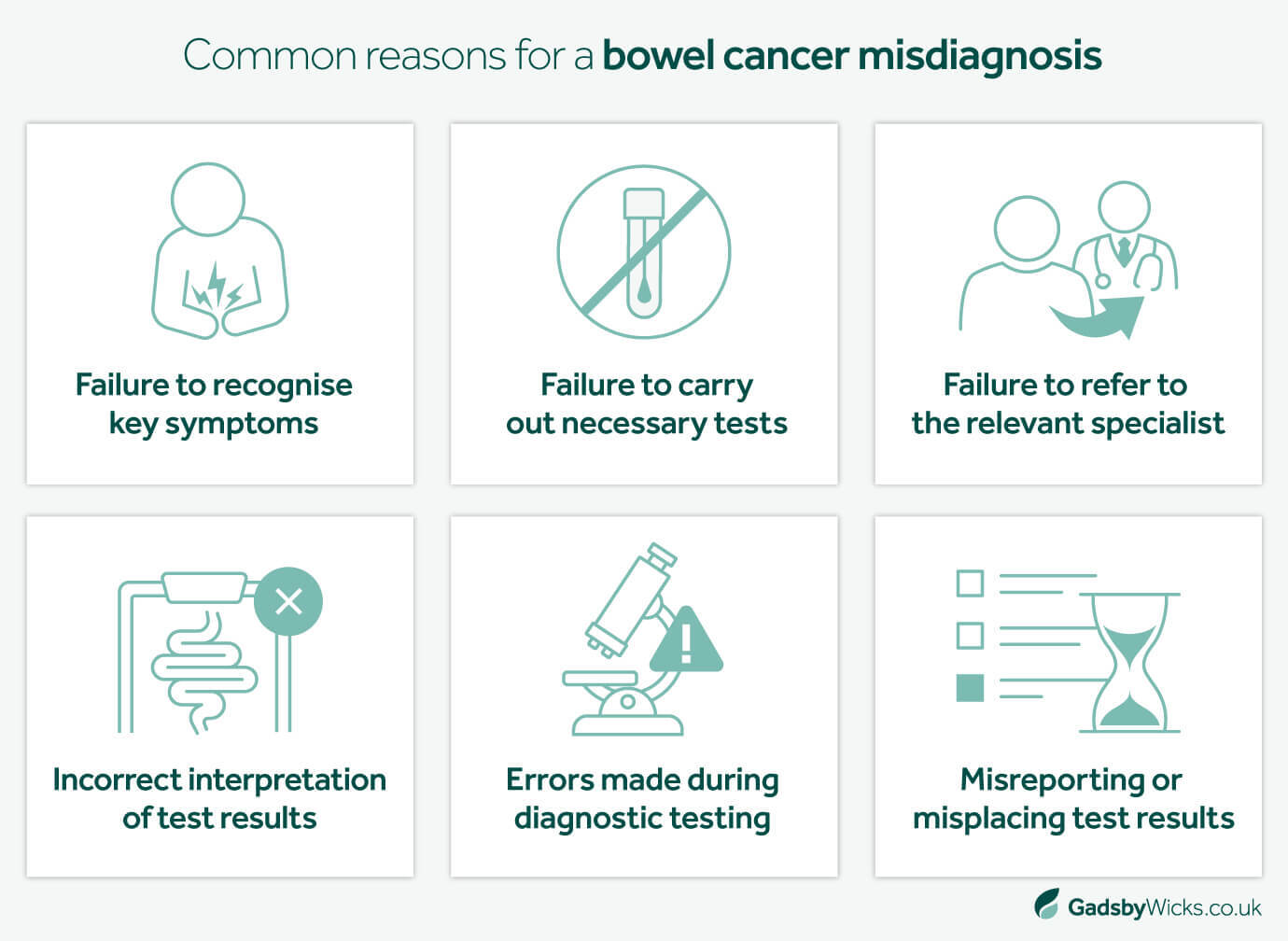
Common reasons why bowel cancer may be misdiagnosed, or experience a delay in diagnosis, include:
Any of these negligent actions or inactions may be grounds for a bowel cancer misdiagnosis claim (if the patient’s condition significantly worsens as a result). Indeed, in study conducted by NHS Resolution into missed cancer diagnoses between April 2016 and March 2023, 20% of settled claims were for colorectal cancers – the highest for any cancer type.
Bowel cancer symptoms can often be mistaken for other, less serious bowel conditions. Bowel cancer being misdiagnosed as IBS or haemorrhoids is among the most common, as the two conditions share several symptoms, including changes in bowel habits and abdominal pain.
This makes it vital for healthcare professionals to screen patients thoroughly when these symptoms persist, to ensure the correct diagnosis.
Fundamentally, a misdiagnosis or delayed diagnosis of bowel cancer allows the cancer to progress while it remains undiagnosed and untreated.
The consequences will depend on the length of the delay and the type of bowel cancer – some progress faster than others. Our solicitors have represented numerous claimants whose lives were altered significantly due to a bowel cancer misdiagnosis:
In the most tragic instances, a delayed diagnosis of colorectal cancer robs someone of years of their life. When a Stage 2 bowel cancer advances to Stage 3, or Stage 3 to Stage 4, it can significantly impact the patient’s prognosis and increase the chances of relapse.
Not only is this unfair on the patient, but their loved ones, who must come to terms with losing the patient sooner than they should have had their cancer been diagnosed at an earlier stage.
At Gadsby Wicks, we recognise the emotional and physical impact this can have on our clients and their families. We treat each person with the sensitivity and compassion they deserve, while ensuring that our investigations are managed efficiently and professionally.
For three years, Miss M suffered numerous symptoms including rectal bleeding, constipation, diarrhoea, unexplained weight loss, fatigue, lower back pain and abdominal pain.
During GP and A&E visits, she was diagnosed with an anal fissure, haemorrhoids and anaemia at different times, but nothing cured her pain. Eventually, an MRI of her back revealed an abnormality in her bowel, which was determined to be a tumour.
Miss M underwent surgery to remove some of the tumour, followed by chemotherapy, but unfortunately died two years after diagnosis.
Our solicitors at Gadsby Wicks pursued her cancer misdiagnosis claim due to the failure to arrange an MRI or CT scan sooner. Had Miss M’s cancer been diagnosed two years earlier, surgery would have been possible, and her life would have been prolonged by up to five years.
Wondering if you have the right to sue for misdiagnosis of bowel cancer? For a bowel cancer negligence claim to be valid, you must prove:
For a delay in treatment or diagnosis to be considered significant, it must have led to one (or more) of three outcomes:
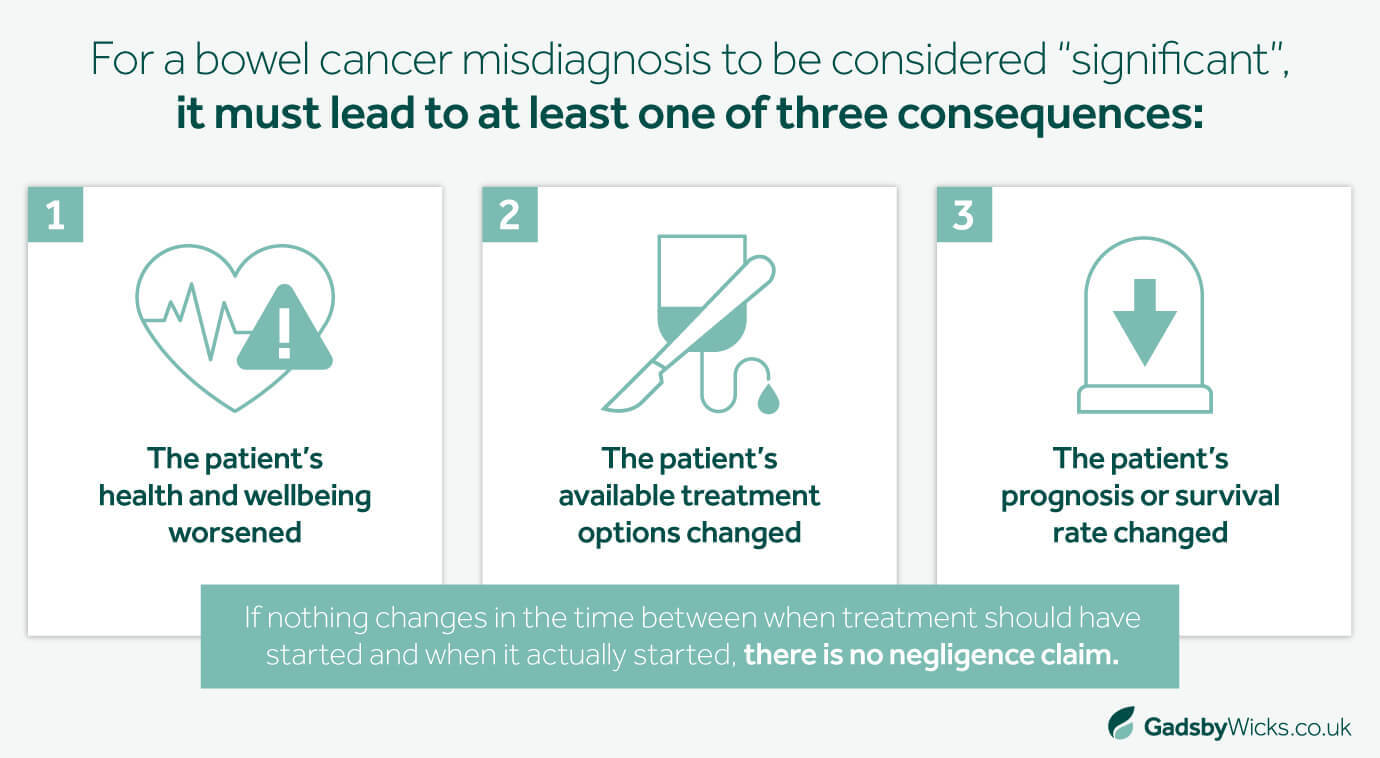
Certain types of bowel cancer require many months, if not years, to progress from one stage to the next. This means that even if there was a lengthy delay between your first GP appointment and receiving the correct diagnosis, if your health, prognosis or treatment options remain the same, there is no negligence claim.
As highly experienced misdiagnosis claims solicitors, we gather all available evidence to understand how your bowel cancer misdiagnosis affected you, and prove that the delay had a significant impact:
We also work closely with impartial, independent medical experts who will assess the impact of your delayed bowel cancer diagnosis and determine if an earlier diagnosis would have improved your outcome.
Do you believe you or someone you love suffered because their bowel cancer was misdiagnosed? Start your claim now to speak with our experts.
We understand that starting a bowel cancer negligence claim can be intimidating. We aim to make the claims process as straightforward as possible.
After completing our online form or contacting us directly, we will arrange a free initial consultation with our dedicated nurse advisers. They will listen to your situation, take notes, and establish the most appropriate way to fund your claim.
Our experienced solicitors will review your claim – we only take on cases we are confident we can win. If we believe your claim is valid, you will then be assigned one solicitor who will be responsible for your case from start to finish. They will be your go-to person to answer any questions and guide you through the process.
We will then start gathering the evidence to support your claim, contact relevant independent experts to conduct reports, and file the relevant paperwork on your behalf. From these initial investigations to negotiating a settlement, we are with you every step of the way.
There is no definitive timeframe for a bowel cancer negligence claim, as every claim is different. It will depend on the complexity of your case, the availability of independent experts, the stance taken by the defendants, and numerous other factors.
In our experience of managing claims across Essex and East Anglia, we estimate these claims to take between two and five years to reach a final settlement.
Our long track record and established network of independent medical experts ensure that we work as efficiently as possible, while never rushing or overlooking crucial details.
Most claimants have a time limit of three years from the Date of Knowledge to make a bowel cancer misdiagnosis claim.
The Date of Knowledge is when you should have become aware that something was wrong with your previous diagnosis. This ensures that you can pursue a claim even if it has been more than three years since your first GP visit.
There are exceptions to the three-year limitation period:
In all circumstances, we encourage you to start your claim as soon as possible, to ensure that evidence remains fresh.
As “no-win, no-fee” medical negligence solicitors, we guarantee that our clients do not pay a penny at any stage unless their bowel cancer claim is successful.
We assume all costs throughout the claims process, and take our success fee from your final settlement. This means you are never out of pocket throughout your case.
There is no fixed bowel cancer compensation amount or average settlement for cancer misdiagnosis. Awards in cancer misdiagnosis cases can range from tens of thousands to millions of pounds, depending on the severity of harm and the financial losses caused by the misdiagnosis or delayed treatment.
Compensation is split into two main categories:
Examples of financial losses that may be accounted for in your final compensation award include:
Through our investigations, we will provide you with a clear estimate of what we expect to recover, and keep you informed through our negotiations with the defendants.
We hope our guide has helped you better understand the causes and consequences of a bowel cancer misdiagnosis, and what is required to make a claim.
Since 1993, our trusted medical negligence solicitors have represented hundreds in cancer misdiagnosis claims, and recovered millions in compensation. Supporting you at every step of the process, we help you find answers for what happened to you or your loved one, and achieve a settlement that secures your financial future.
If you are ready to pursue the compensation, answers and justice you deserve, start your claim with us today, or contact us directly to discuss your situation.
All content contained within this article is meant for general information only – this should not be treated as a substitute for medical advice from your doctor or another healthcare provider. If you require legal advice specific to your situation, please contact our team directly.
Gadsby Wicks is not liable for any diagnosis made from the content of this article, nor does it endorse any service or external site linked to within the article.
Always consult your GP if you are concerned about your health and wellbeing, or speak to us if you require legal advice.
Related Insights