
 Back to top




- No win. No fee.
- No hidden costs
- 100% risk-free, only pay if you win
- Home >
- Insights >
- Birth Injuries >
- Your helpful guide to C-section negligence claims
About the Author

Tami Frankel
Medical Negligence Solicitor and Partner - LLB (Hons) University College London
Read more about Tami »In the 2024/25 NHS annual report, more mothers in England gave birth via caesarean section (also known as a C-section) than through natural births for the first time (45% vs 44%).
Between emergency procedures and surgeries planned in advance, C-sections are increasingly common across the UK, and in the vast majority of cases, are performed safely with no long-term complications.
However, mistakes do happen. From substandard care either during or after the procedure, to failing to arrange a C-section when it was the safest route – these errors can have life-altering consequences for both mother and baby, and ruin what should be a joyous occasion for their family.
In this guide, we will outline the examples of birth injury negligence that can impact a C-section, and what you need to know about making a claim.
Understanding caesarean section negligence
What is a caesarean section?
A caesarean section or C-section is a major surgical procedure where, instead of a natural, vaginal birth, a surgeon makes an incision between the mother’s abdomen and womb to deliver the baby. Recovery time is typically longer than a natural birth due to this.
It is a common and routine procedure that hundreds of thousands of mothers undergo every year, but it still requires precise execution to prevent complications for either the mother or the baby.
When would a C-section be performed?
There are several reasons why a C-section would be recommended rather than a natural or “spontaneous” birth:
- The placenta is blocking the birth canal, preventing a vaginal birth
- The baby is positioned feet-first or sideways (Breech presentation) near the due date
- The baby is very large, or the mother suffers from obesity or diabetes
- The mother had a previous C-section
- There are multiple babies (usually triplets or more)
- The mother experiences severe Preeclampsia or another serious health condition
An emergency C-section may also be arranged if the baby is considered in distress or labour is not progressing as expected, endangering mother and/or baby.
Why have C-sections become more common?
In recent years, more mothers have elected to undergo a C-section in any event rather than a natural birth. Over the past 10 years alone, the number of caesareans has doubled in the NHS.
The reasons for this are diverse, with some suggesting that concerns over NHS maternity care standards have led many mothers to consider caesarean sections safer than other birth procedures.
Soo Downe, a professor of midwifery at the University of Lancashire, said in an interview:
“In some cases women are going for caesarean sections as a kind of least-worst option because they don’t really believe they’re going to have the kind of support they need to have a safe, straightforward, positive labour and birth in hospital.”
Common examples of C-section negligence
While the vast majority of C-section procedures are conducted safely with no long-term harm for the mother or the baby, sometimes treatment falls below an acceptable standard.
Some of the most notable instances of caesarean section negligence include:
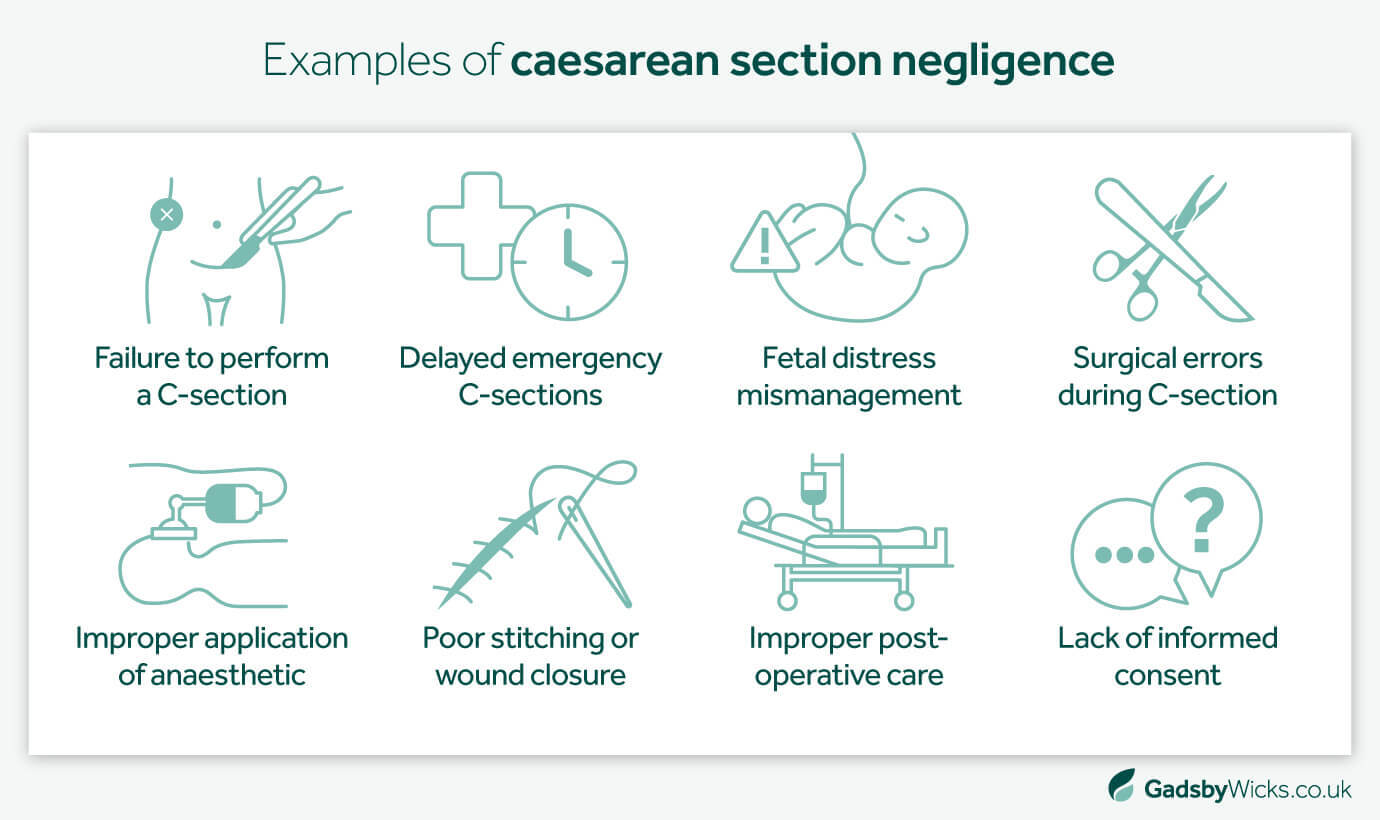
Failure to perform a C-section
First, if your healthcare providers refuse to perform a C-section when it is the best course of action for you and your baby, that can amount to negligent treatment.
In the landmark case Montgomery v Lanarkshire Health Board (2015), the Supreme Court ruled that whenever there is a greater risk associated with a vaginal birth, a woman should always be offered a caesarean birth.
Furthermore, the National Institute for Health and Care Excellence (NICE) guidelines state that if a woman requests a caesarean birth, her doctors should support this if they believe she is making an informed choice.
Delayed emergency C-sections
Similarly, healthcare professionals may be considered negligent if there is a preventable delay in performing an emergency caesarean section.
As noted earlier, an emergency C-section may be required if the labour stalls, the baby experiences distress or there is a breech presentation.
If obstetricians, midwives or other healthcare workers fail to monitor the labour properly or incorrectly persist with a natural birth, it can have serious repercussions for the mother and her baby, including hypoxic brain injuries due to oxygen starvation.
Fetal distress mismanagement
If during a caesarean section the surgeon or supporting staff miss signs of fetal distress, such as decreased movement or abnormal heart rates, or fail to react quickly enough, this can also lead to serious injuries to the baby during delivery.
Surgical errors during a C-section
Every surgical procedure carries an inherent risk. If the surgeon mistakenly punctures nearby organs (such as the bladder or bowel), causes avoidable internal damage or misuses surgical instruments, this can result in serious maternal injuries during the caesarean section.
Other examples of surgical errors are lacerations to the baby when performing the incision, or leaving instruments inside the body post-procedure.
Improper administration of anaesthetic
Administering the wrong dose of anaesthetic for the C-section may result in the patient experiencing pain or waking during the surgery, known as anaesthesia awareness.
Another example of this obstetric negligence is not checking the patient’s medical records and providing anaesthesia that causes an adverse or allergic reaction.
Poor stitching or wound closure
If the mother is poorly stitched up following the C-section, it may result in the wound reopening, bleeding, hernias and avoidable scarring.
Improper post-operative care
Like any surgical procedure, it is vital that the patient is attentively monitored post-operation. Failing to do this could result in infections contracted post-surgery being missed, or dangerous complications such as sepsis or internal bleeding.
Lack of informed consent
Finally, if the mother is not adequately informed of the risks and ramifications of undergoing a caesarean section, and has a poor outcome, this could also be grounds for a birth injury negligence claim.
Who can be responsible for C-section negligence?
Negligence during a caesarean section may involve several healthcare professionals, including (but not limited to):
- Obstetricians
- Midwives
- Nursing staff
- Surgeons
- Anaesthetists
- Maternity ward staff
It is also important to note that you can claim negligence against both NHS and private healthcare providers.
What are the potential consequences of C-section negligence?
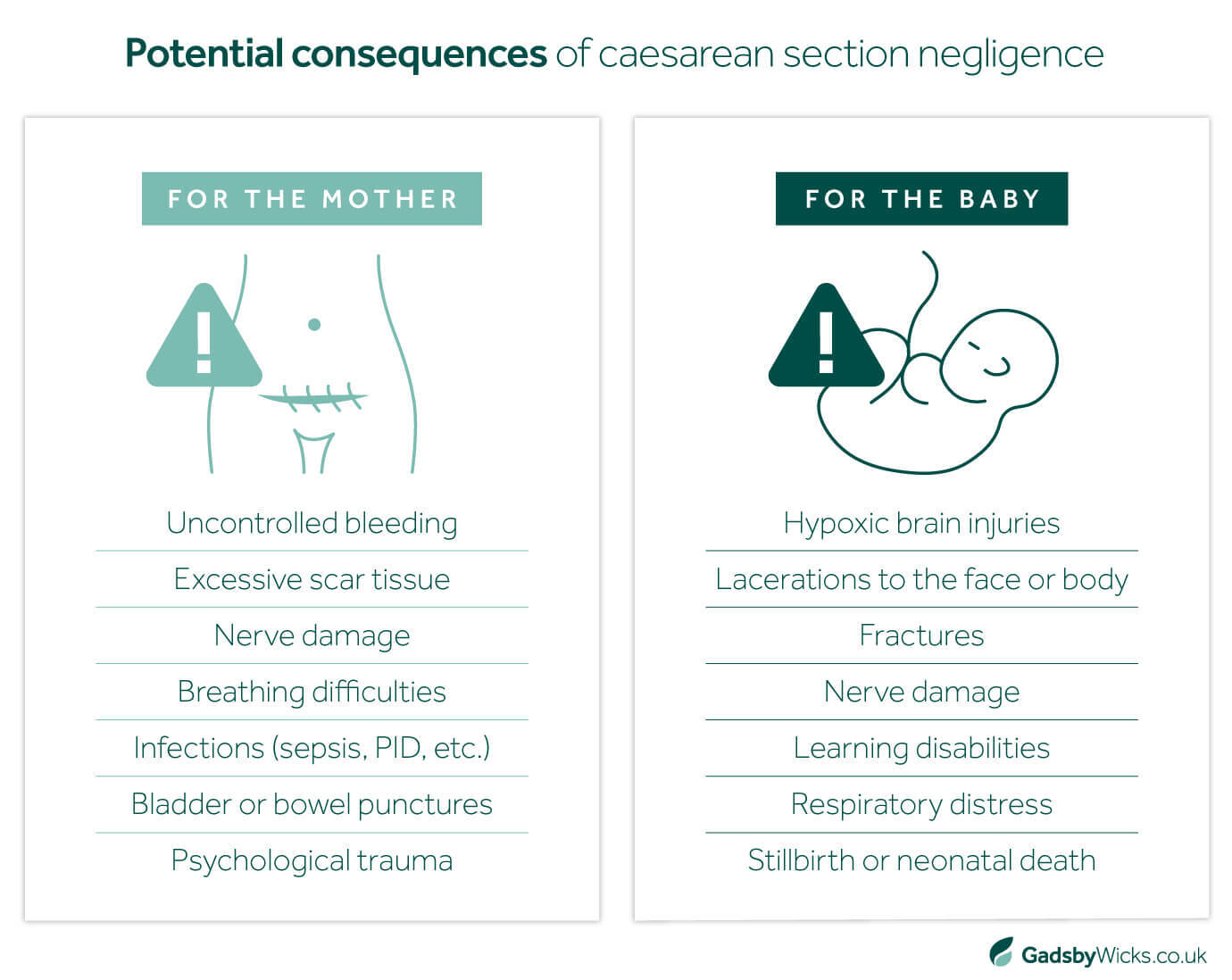
A negligently performed or delayed caesarean section can have serious and potentially life-changing ramifications for both the mother and the baby. Some of the unfortunate outcomes that can occur include:
Injuries to the mother due to C-section negligence
- Uncontrolled bleeding and haemorrhages, which may require emergency surgery or blood transfusions to treat
- Excessive scar tissue both internally and externally, causing chronic pain or affecting the mother’s self-esteem
- Nerve damage or breathing issues caused by improper application of anaesthesia
- Infections contracted during or after the procedure, such as sepsis or pelvic infections
- Punctures to the bladder or bowel, leading to chronic pain, infections or further surgeries to correct this damage
- Psychological trauma during childbirth, such as post-traumatic stress disorder (PTSD) or depression, especially if the experience was life-threatening
Injuries to the baby due to C-section negligence
- Hypoxic brain injuries due to oxygen starvation, which increases the risk of lifelong disabilities such as Cerebral Palsy and learning difficulties
- Physical harm during childbirth, such as lacerations caused during the incision, fractures, or nerve damage to the baby’s arms, leading to conditions like Erb’s Palsy
- In the most tragic circumstances, delays or mistakes during a C-section can lead to a stillbirth or neonatal death
When these often life-altering outcomes could have been prevented through better-quality treatment, those affected deserve answers to what happened and receive suitable compensation for their injuries.
How to make a C-section negligence claim
Now you know notable examples of caesarean section negligence and the harm these scenarios may cause, below we answer the most pressing questions about making an obstetric negligence claim.
How do you prove C-section negligence?
Proving obstetric negligence in any case essentially comes down to three key elements:
- Duty of care: Did your healthcare providers breach their duty of care to you?
- Injury: Did you suffer pain, injury, loss or damage during your treatment?
- Causation: Was your suffering a direct result of the breach of duty of care?
A successful claim requires all three of the above criteria to be proven. For the breach of duty of care, you must demonstrate that the standard of care you received fell below what a competent medical professional in the same field would have done.
To prove causation, you must show that there is a clear link between the negligent care and the harm you experienced, judged on the Balance of Probabilities (i.e. it is more likely that negligence caused your harm than not).
As highly experienced birth injury claim solicitors, we will investigate a wide range of evidence to prove that our client’s injuries were the result of negligence, including:
- Medical records
- Personal and witness statements
- Photographs and visual evidence
- Financial documents
- Independent medical expert reports
Independent medical expert reports are particularly critical for proving both breach of duty and causation, which is why we maintain an extensive network of relevant experts to deliver the most accurate and useful information possible.
Is there a time limit to make a C-section negligence claim?
The limitation period for medical negligence cases is typically three years from the date of the injury, or the date that the patient should have been aware of an injury (the Date of Knowledge).
This would be the limit for the majority of mothers injured during their C-section. However, if the baby is injured in the procedure, they would have until their 21st birthday to make a claim (three years after they legally become an adult).
Another exception is that if the claimant lacks adequate mental capacity, such as in a Cerebral Palsy negligence claim, there is no time limit attached.
How long does it take to settle a C-section negligence claim?
There is no single answer to this, as the length of your C-section negligence claim depends on several factors:
- The nature and complexity of your injuries
- Whether the injuries affect the mother or the baby (or both)
- The number of medical experts that must be contacted
- The defendants’ position on liability and compensation
In most cases, we would expect C-section claims for the mother to take between two and five years to reach a final settlement. For C-section claims involving children, it may take significantly longer, as it will often take time to assess the long-term impact of their injuries.
These are just rough estimates, as every claim is unique. At Gadsby Wicks, we will keep you informed at all times so you know how your case is progressing.
How much does it cost to make a C-section negligence claim?
The cost of making a claim will depend on the funding options offered by your solicitors. We firmly believe that someone’s financial circumstances should never act as a barrier to the justice they deserve.
This is why we work on a no-win, no-fee basis. You pay nothing upfront and we will not receive a penny unless your claim is successful. Plus, our success fee will be taken from your final settlement, so there is zero financial risk for you at any stage.
How much compensation can you recover in a C-section negligence claim?
There is no one-size-fits-all answer to this question, as it depends on several factors:
- The nature and severity of the injuries sustained
- The long-term consequences of the injuries (care requirements, future procedures, impact on future earnings, etc.)
- The direct financial losses sustained as a result of the negligent treatment
For these reasons, compensation must always be determined on a case-by-case basis. Birth injury compensation is divided into two main categories:
- General damages, which cover the claimant’s pain, suffering and loss of amenity (PSLA)
- Special damages, which cover present and future expenses caused by the claimant’s injuries
Special damages are usually where the greatest variations in compensation are found, as they depend on the specific consequences felt by the claimant. These damages often cover expenses such as:
- Loss of earnings
- Long-term care costs
- Medical aids and equipment
- Future procedures, treatments and therapies
- Medication costs
- Adaptations to the home and vehicles
- Travel expenses
For more information about compensation for C-section negligence, we encourage you to watch the Medical Negligence Matters episode on how compensation works.
Where do I start with my C-section negligence claim?
Before contacting a law firm about your C-section negligence claim, you may wish to do the following:
- Seek medical advice about your injuries
- Make notes about your experiences and symptoms
- Request copies of your medical records from your GP
This is not mandatory, but it can help your solicitors understand your circumstances and immediately start investigating the strength of your claim.
When you contact Gadsby Wicks, you are first interviewed by one of our experienced nurse advisers, who will listen to your story and take notes about your case.
Your claim will be reviewed by our solicitors. If we believe you have a valid claim, you will be assigned one specialist clinical negligence solicitor to oversee your case, and be your direct point of contact from start to finish.
If you’d like to learn more beyond this, please read our dedicated claims process guide.
Did you suffer negligence during maternity care? Talk to the specialists
We understand that injuries sustained during a C-section are deeply personal, and can have a lifelong impact on you and your family’s lives.
That is why it is important to work with solicitors who specialise in birth injury and gynaecological negligence claims, like our team at Gadsby Wicks. For over 30 years, we have managed hundreds of cases involving C-section negligence, giving us the experience to guide your case with the utmost efficiency and expertise.
We take the time necessary to understand your story and help you feel comfortable, explaining each stage of the claims process and keeping you informed at every step. Together, we make claiming as straightforward and stress-free as possible, so you secure the compensation, answers and justice you deserve.
Complete our online form to start your claim today, or contact us directly to discuss your situation.
Disclaimer
All content contained within this article is meant for general information only – this should not be treated as a substitute for medical advice from your doctor or another healthcare provider. If you require legal advice specific to your situation, please contact our team directly.
Gadsby Wicks is not liable for any diagnosis made from the content of this article, nor does it endorse any service or external site linked to within the article.
Always consult your GP if you are concerned about your health and wellbeing, or speak to us if you require legal advice.
Do you have a negligence claim?
Meet our medical negligence claims solicitors
Related Insights

Birth Injuries
How long do birth injury claims take to settle?


Birth Injuries
Understanding the long-term impact of a perineal tear

Tami Frankel
- 6 min read