
 Back to top



Misdiagnosis Claims

Medical Negligence Solicitor and Partner - Degree in Law (LLB)
Read more about Corrina »Subarachnoid haemorrhages (SAH) are, thankfully, rare, affecting around 8 in every 100,000 people each year.
Being rare does not give healthcare professionals immunity from a misdiagnosis or delayed diagnosis. In cases of SAH, early diagnosis and treatment are critical to minimise the very real risk of death or serious disability.
In this article, we help you understand the impact of a missed subarachnoid haemorrhage, and what you need to know about making a brain injury claim if you or someone you love is affected.
A subarachnoid haemorrhage (SAH) is a life-threatening type of stroke caused by bleeding in the space surrounding the brain (known as the subarachnoid space). A bleed in this space often increases pressure on the brain, slows blood flow and damages nearby brain cells.
Around 85% of SAHs are caused by a ruptured brain aneurysm, when a weak area in a blood vessel balloons out and bursts. The onset of SAH is often sudden and unpredictable, and rapid treatment is vital to reduce the risk of the worst possible outcomes.
It is also around 1.6 times more common for women than men to sustain a subarachnoid haemorrhage.
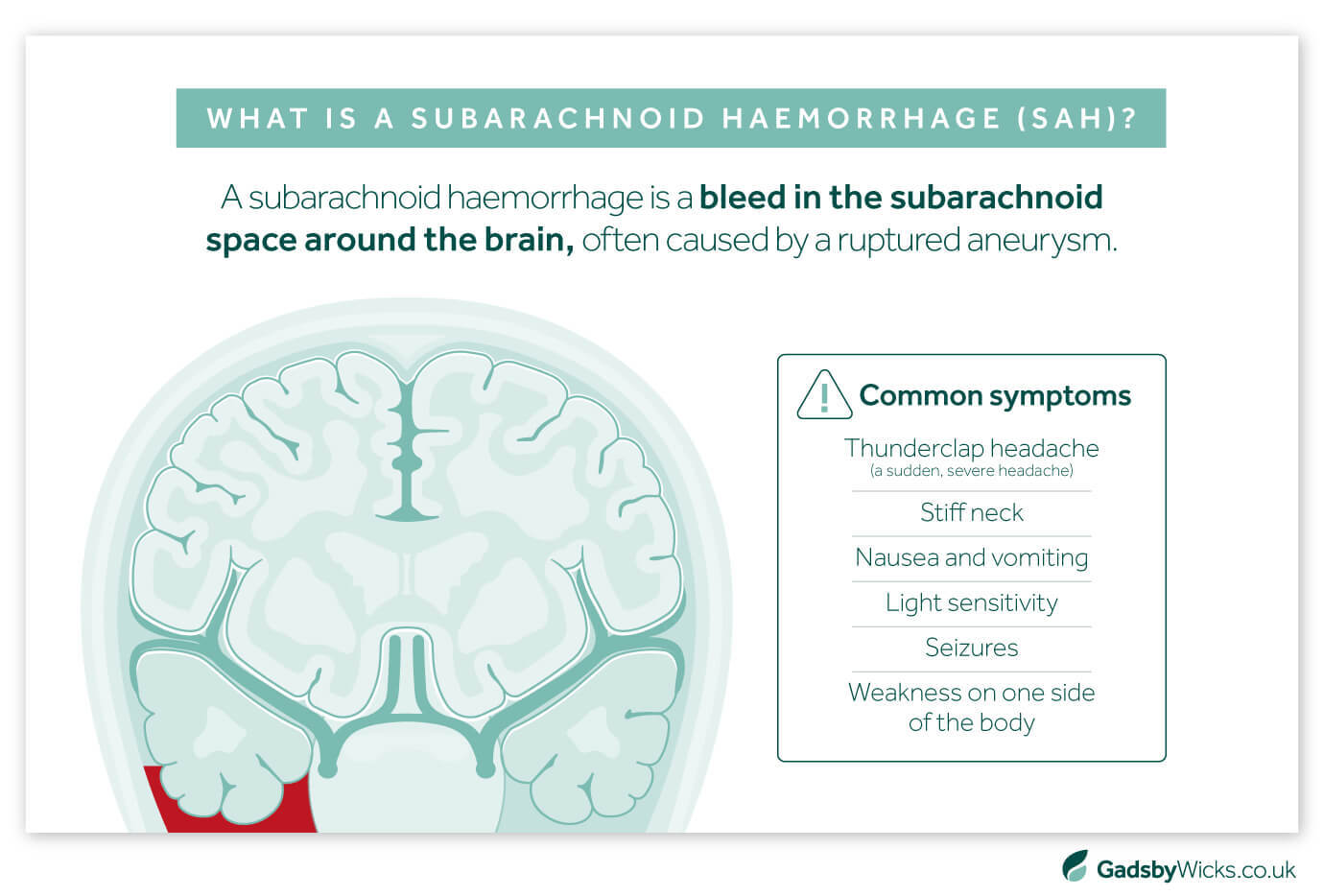
Key differences between a subarachnoid haemorrhage and other types of strokes include:
The most distinctive symptom of a subarachnoid haemorrhage is a “thunderclap” headache (or sentinel headache). This is a sudden and severe headache, considered by many as the worst headache someone can experience.
Unlike other headaches, a thunderclap headache reaches maximum intensity in seconds to minutes. This should be a strong indicator for GPs and other healthcare professionals that it is more serious than a migraine or tension headache.
Other typical subarachnoid haemorrhage symptoms include:
While anyone in theory can sustain a subarachnoid haemorrhage, people at the greatest risk are those with an existing cerebral (brain) aneurysm. Other risk factors include:
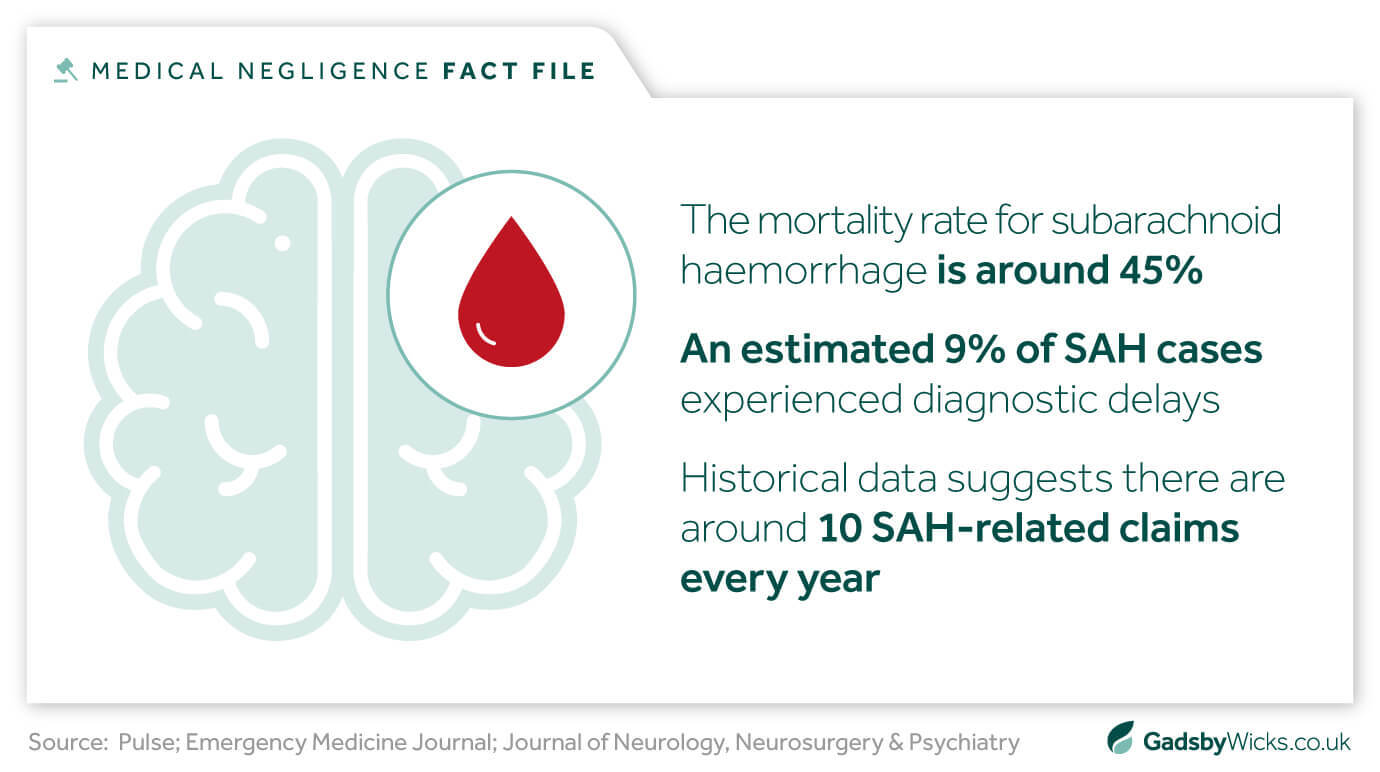
The severity and sudden onset of a subarachnoid haemorrhage make it a highly dangerous condition. Around 45% of people who sustain an SAH pass away, while 30% of survivors suffer severe, long-term disabilities.
The risk of death or severe brain injury noticeably increases following a small rupture, with a 1.5% chance of a further bleed in the two weeks after the first rupture.
Furthermore, sepsis is a frequent and serious complication after a subarachnoid haemorrhage, affecting up to 28% of intensive care patients. If this relates to you or someone you love, find out how we can help you make a sepsis negligence claim.
These are not just statistics – they represent real people. A delay or failure to diagnose subarachnoid haemorrhage can quickly have devastating consequences for the patient and their loved ones, and be grounds for a negligence claim.
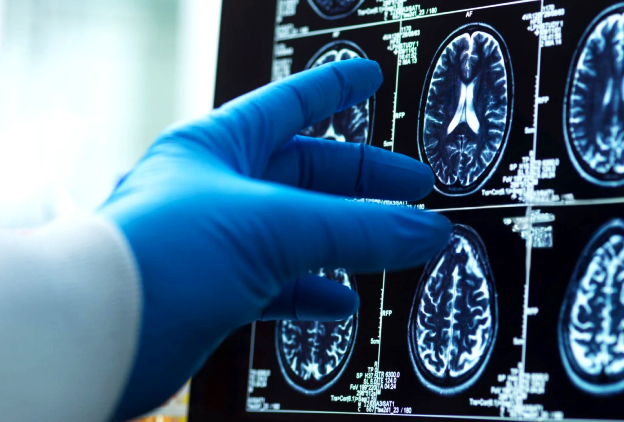
When a subarachnoid haemorrhage is suspected, time is of the essence. When a patient presents with the typical thunderclap headache and other key symptoms of SAH, their healthcare providers should arrange urgent diagnostic tests, including:
In most circumstances, the right tests are ordered promptly. But when they are not, the consequences can be irreversible. While there is little nationwide data on brain haemorrhage misdiagnosis, a study between May 2018 and April 2021 showed that around 9% of SAH cases experienced diagnostic delays after seeking care.
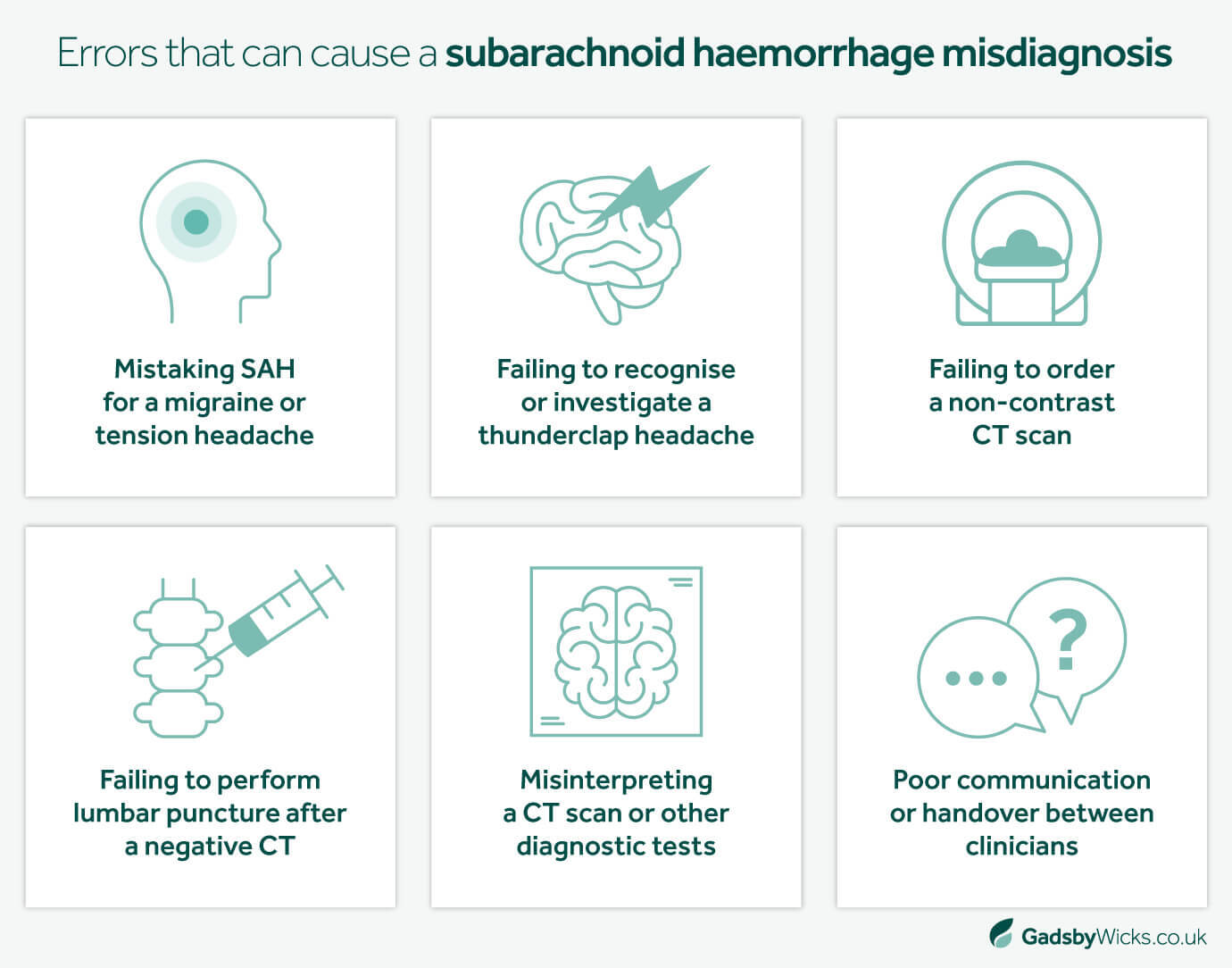
A major reason for this is that SAH is commonly mistaken for less severe conditions, such as a migraine or tension headache. This can result in vital tests not being arranged until it is too late to save the patient’s life or prevent life-changing disabilities.
Other causes of a missed subarachnoid haemorrhage can include:
All of the above could be the basis of a subarachnoid haemorrhage negligence claim, as could other mistakes such as surgical errors when treating the bleed or medication errors post-surgery.
A missed subarachnoid haemorrhage can have serious, potentially catastrophic consequences, including (but not limited to):
Simply put, the delayed diagnosis and treatment of a subarachnoid haemorrhage can often lead to long-term neurological damage or the death of a patient. Any mistake can have life-threatening implications.
Healthcare professionals who may be responsible for a missed subarachnoid haemorrhage include:
More than one party can share responsibility for an SAH being misdiagnosed or not treated promptly enough.
If you believe that you or someone you love suffered due to an avoidable delay in diagnosing or treating a subarachnoid haemorrhage, you are entitled to pursue a brain injury negligence claim.
Your first step is to contact a specialist medical negligence solicitor or firm for a free initial consultation. At Gadsby Wicks, we will arrange a meeting with our experienced nurse advisers to discuss what happened to you or your loved one.
Our team will carefully review your case and, where we believe we can help, we assign one dedicated solicitor to guide you from start to finish. They will explain the claims process to you, answer any questions you have at any time, investigate all available evidence and handle negotiations with the defendants on your behalf.
Keeping you informed at every step of the process and treating your case with the care and compassion you deserve, we do everything in our power to get the answers you are looking for and secure your family’s financial future.
In any delayed diagnosis negligence claim, you must prove three key elements:
For a delay to be considered significant, you must prove that the delay resulted in a worse outcome than what would have happened with no delay. If the patient had sustained the same injuries in any event, there is no negligence claim, even if there was a breach of duty of care.
We understand this can be difficult to hear, particularly if you have already been through so much. Our role is to help you understand what evidence exists and whether a claim is viable with honesty and compassion.
Evidence needed to prove a misdiagnosis claim of this nature includes:
We also work with impartial, independent medical experts to determine whether there was a breach of duty of care, and if an earlier diagnosis would have led to a better outcome.
The typical limitation period for medical negligence in the UK is three years from the date of the injury or Date of Knowledge (when the patient should have become aware that something was wrong).
However, there are exceptions to this rule:
In all circumstances, we encourage you to start your claim as soon as possible, to ensure that evidence remains fresh.
Losing someone due to a missed diagnosis is one of the most painful experiences imaginable, and you may have the right to seek justice on their behalf.
You can make a claim on behalf of a loved one who died after a missed subarachnoid haemorrhage if:
For more information, please refer to our page on death by medical negligence claims.
There is no average compensation amount for a missed subarachnoid haemorrhage. It varies from client to client, depending on the severity of their injury and the long-term impact on their life.
Brain injury negligence compensation is split into two main areas:
To determine general damages, we may refer to the latest Judicial College Guidelines (JCG). This offers estimated values for different types of injury, such as brain injuries, paralysis and psychological harm. However, these are only guidelines, as general damages should always be calculated on a case-by-case basis.
For special damages, here are some examples of financial losses that may be accounted for in the final settlement:
By working with specialist medical and case management experts, and thoroughly investigating all evidence, we help ensure our clients recover the maximum compensation for their injuries and for their future, whatever it looks like for them.
At Gadsby Wicks, it costs you nothing to make a brain injury negligence claim. As a strict “no win, no fee” medical negligence firm, our clients do not pay a penny at any stage of the process unless their claim is successful.
If we win your case, our success fee is recouped from your compensation award. You are never in any financial risk, whatever the outcome, because we believe that nobody should be denied justice based on their financial situation.
Learn more about our medical negligence funding options.
Subarachnoid haemorrhages may be rare, but that is no excuse if healthcare providers miss key symptoms, fail to refer or escalate care, or inadequately monitor their patients’ wellbeing.
When a missed subarachnoid haemorrhage has the potential to leave a patient permanently disabled or cost them their life, we leave no stone unturned to ensure those affected by negligent treatment get the compensation, answers and justice they deserve.
Since 1993, we have represented hundreds of brain injury claims and recovered millions in damages. We guide you through every step of the process with compassion and clarity, to achieve a settlement that protects you and your family’s future.
Start your claim with us today, or contact us directly to discuss your situation.
All content contained within this article is meant for general information only – this should not be treated as a substitute for medical advice from your doctor or another healthcare provider. If you require legal advice specific to your situation, please contact our team directly.
Gadsby Wicks is not liable for any diagnosis made from the content of this article, nor does it endorse any service or external site linked to within the article.
Always consult your GP if you are concerned about your health and wellbeing, or speak to us if you require legal advice.
Related Insights