

 Back to top




Misdiagnosis Claims

Medical Negligence Solicitor and Partner - LLB (Hons) University of Mid-Glamorgan
Read more about Tony »Every year, heart attacks account for an estimated 100,000 hospital admissions in England. Also known as a myocardial infarction, heart attacks are life-threatening medical emergencies, requiring immediate treatment to save lives and minimise damage to the heart muscle.
If signs or symptoms of a heart attack are missed, or if it takes too long to diagnose, these delays can place someone’s life or long-term health in serious jeopardy.
In this guide, you will learn how heart attacks can be misdiagnosed, the steps to make a cardiac negligence claim, and how much compensation you could recover for this type of claim.
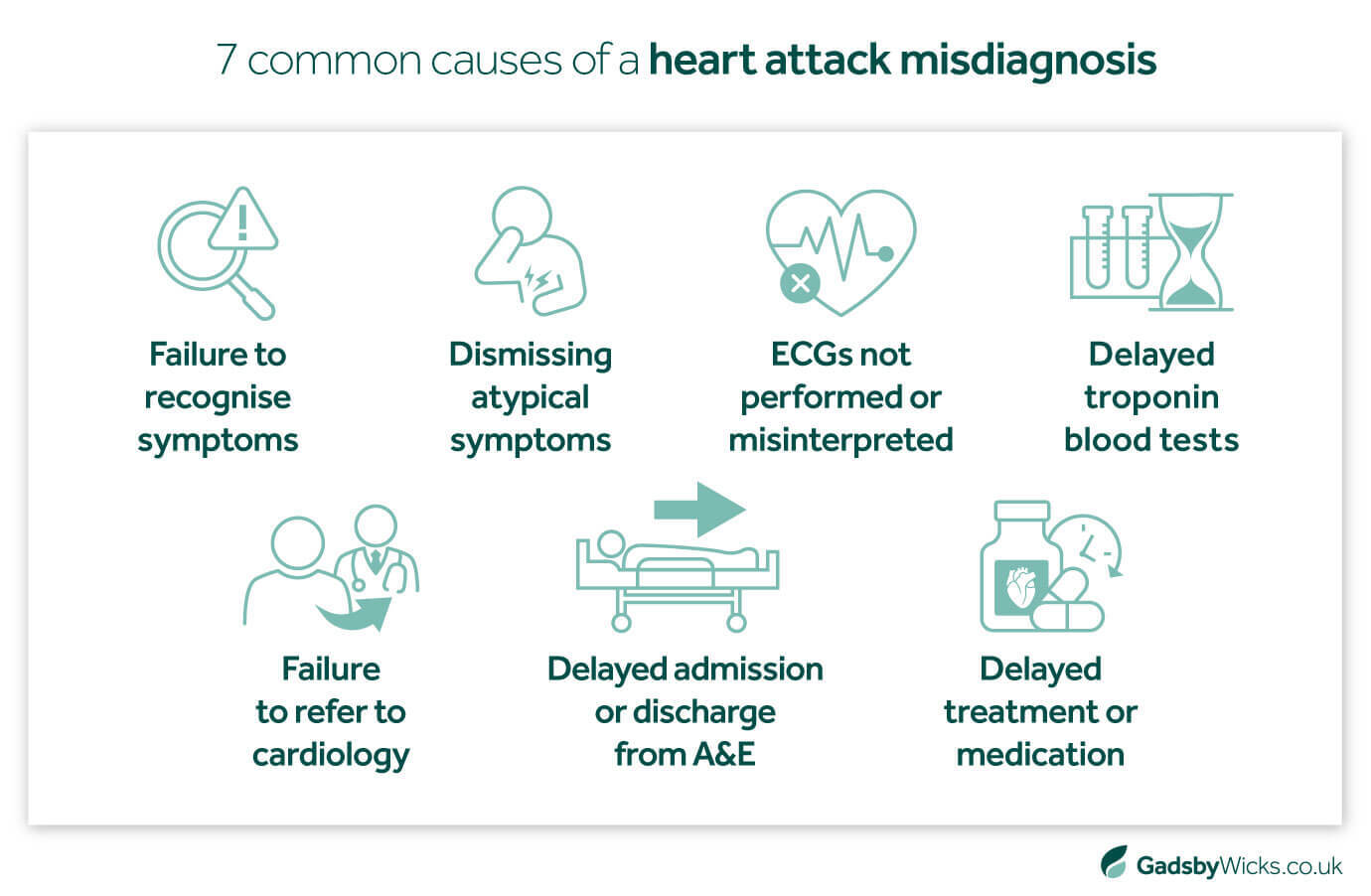
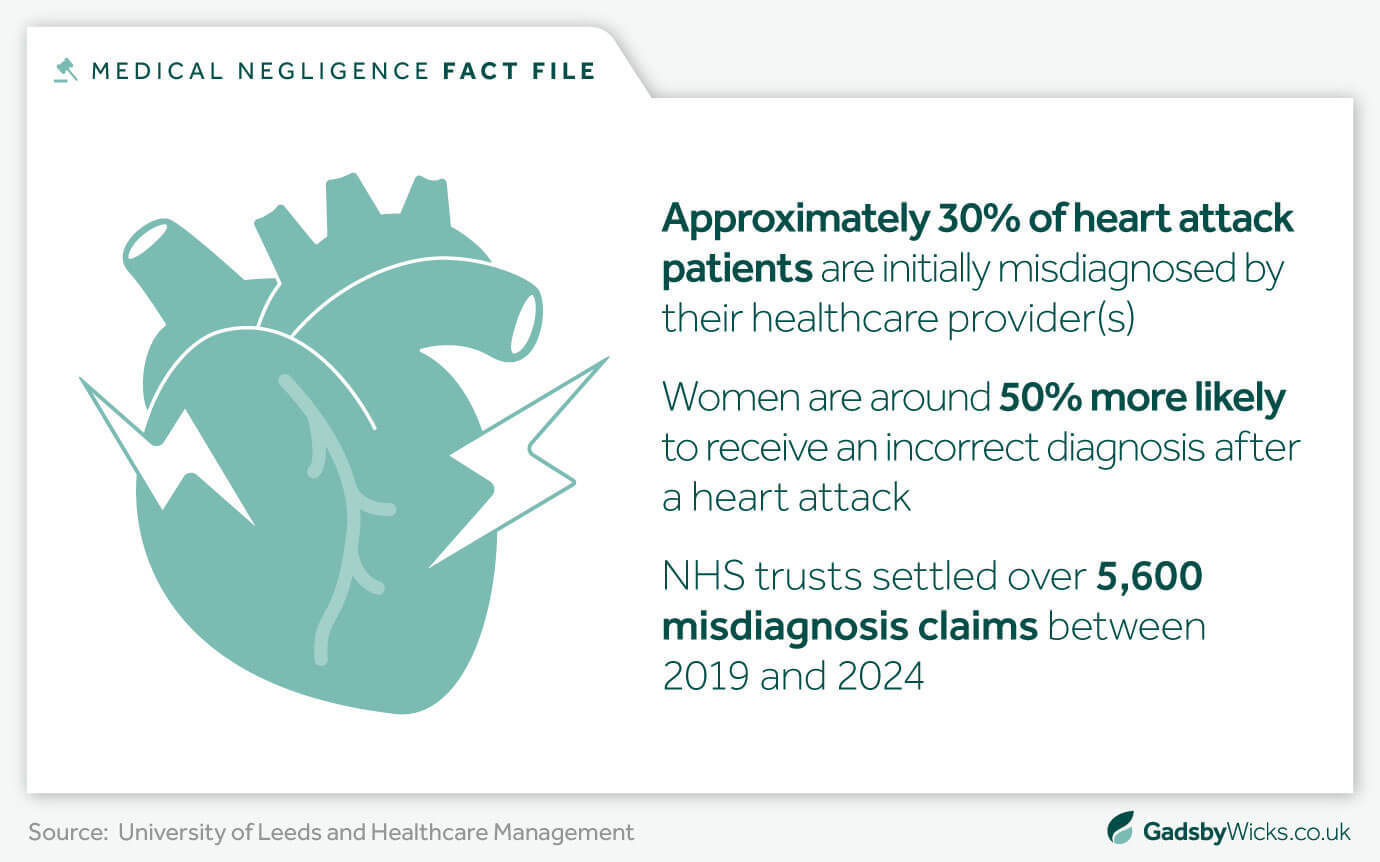
Considering it is such a serious medical emergency, you may be surprised to know that around 30% of heart attacks are initially misdiagnosed. But how are there failures to diagnose heart attacks?
First, a doctor, paramedic or another healthcare professional may miss typical heart attack symptoms, such as:
If this chest pain is misdiagnosed or overlooked, the patient may not receive essential treatment or medication, resulting in future heart attacks or similar heart problems.
Heart attacks also share some overlap with other conditions, such as aortic aneurysms. For more information on these conditions, read our page on aortic aneurysm negligence claims.
Crushing chest pain is the most recognisable symptom of a heart attack. However, it is not always present.
Sometimes called a ‘silent heart attack’, there are several atypical, less obvious symptoms that people may experience during a heart attack:
These atypical heart attack symptoms are particularly common in women, the elderly and diabetics. For them, heart attacks may not feel like crushing chest pain, but a burning or pressure sensation in the upper belly.
In fact, it is estimated that women are around 50% more likely to receive a heart attack misdiagnosis than men.
An ECG (Electrocardiogram) is a simple, painless test that records the heart’s electrical activity, helping doctors identify the blocked blood flow associated with heart attacks.
If an ECG is not performed, or the results are misreported, heart attacks can be misdiagnosed and left untreated.
Troponin blood tests are another crucial technique to diagnose myocardial infarctions, measuring the level of troponin protein in your blood. A delayed blood test, or ignoring abnormal blood results, can be just as problematic as not performing an ECG.
When heart attack symptoms are missed or tests are improperly performed, the affected patient may not be sent to a cardiology specialist for further tests and treatment.
If a heart attack is misdiagnosed in A&E as a less threatening condition, the patient may be discharged early, rather than referred to a cardiologist. This delay can further damage the heart.
Finally, even if the patient is believed to have suffered a heart attack, there may be avoidable delays in treating the damage with angioplasty, or providing medication such as aspirin or clot-busters (thrombolytics).
The ramifications of a misdiagnosed heart attack or a delayed diagnosis often depend on the length of the delay, how the patient was treated during this delay, and the quality of treatment they received.
A heart attack already causes substantial damage to the heart. A misdiagnosis can cause more prolonged pain and increased damage to the heart muscle in the short term. In the long term, it can also result in repeat heart attacks, heart failure or other serious cardiac events.
In addition to the physical impact of a misdiagnosed heart attack, the pain and long-term disability can cause significant psychological damage:
An example of the most tragic consequences of cardiac negligence is a case we managed on behalf of the dependents of our client, Mr T (name anonymised).
A known sufferer of Type 2 diabetes, Mr T consulted his GP complaining of breathlessness and a cough, and was prescribed a five-day course of amoxicillin. When his condition did not improve, he was admitted to A&E, where an ECG and CT angiogram discovered he had severe coronary heart disease.
Mr T was listed for a coronary artery bypass graft, but his illness accelerated over the next week, and he unfortunately succumbed to a cardiac arrest.
Our solicitors pursued his claim on behalf of his dependents, as we argued that he should have been referred to a cardiologist at his initial GP appointment. This earlier referral likely would have provided the time needed for him to undergo a coronary artery bypass graft.
Explore our case studies for more insights into the clients we’ve helped since 1993.
For a heart attack misdiagnosis to qualify for a medical negligence claim, the patient’s cardiac treatment must have fallen below an acceptable standard of care.
To prove heart attack negligence, you must prove:
Causation in cardiac negligence claims can be especially tricky to determine. You must keep in mind that a heart attack already causes a significant amount of damage to the heart.
Therefore, you must be able to prove that the injuries sustained are greater than what would have happened in any event. To prove this, a solicitor will investigate three key areas:
Essentially, you must prove that a reasonably competent clinician would have acted differently than your healthcare provider did, and that earlier diagnosis or treatment of your heart attack would have led to a better outcome.
That is why it is so important to work with a highly experienced cardiac negligence claim solicitor. They understand what evidence is required and who to speak with to prove these vital details, and will take the time necessary to investigate thoroughly.
Practically speaking, any healthcare professional can be liable for a missed heart attack, both in NHS trusts and private hospitals. However, the most common professionals include:
If you believe that you or someone you love suffered due to a misdiagnosed heart attack, you are entitled to make a negligence claim.
Before you reach out to a solicitor or another legal expert, we recommend doing the following:
Now you should contact a trusted solicitor or law firm to discuss your options. When choosing who to represent your claim, always consider the following:
You will first be interviewed by a nurse adviser, who will listen to your story and gather notes on your claim. After your claim is reviewed by the senior solicitors and, if accepted, you will be assigned an experienced solicitor to manage your case from start to finish.
They will be responsible for gathering and investigating all evidence, contacting independent medical experts, and negotiating with the defendants over liability and the settlement, keeping you informed at every step.
If you’d like to learn more, please refer to our dedicated claims process guide.
A heart negligence claim stands or falls on the strength of the evidence provided. To prove your case, your solicitor will gather and investigate a wide range of evidence:
Independent medical expert opinion is particularly crucial in heart attack claims. These reports are key to proving the care you received fell below acceptable standards, and that the negligence had a definitive impact on your health, treatment options and/or prognosis.
Yes. Heart negligence claims are generally subject to a three-year limitation period. This usually begins from when you first became aware that your injuries were due to substandard care – commonly referred to as the Date of Knowledge.
However, there are some exceptions:
Even if more than three years have passed since your injury, it is still worth seeking legal advice. As every claim is at the court’s discretion, a specialist solicitor can review your case and advise whether a claim may still be possible.
There is no “average” compensation award for a heart attack misdiagnosis claim – it must be determined on a case-by-case basis.
The compensation is divided into two broad categories:
General damages compensate the claimant for their pain, suffering and loss of amenity (PSLA). This may range from any scarring or muscle injury caused by the delayed diagnosis or treatment, to the psychological impact of this experience.
The value of general damages will often vary greatly based on the nature of the injuries sustained and their long-term impact on the claimant’s health and welfare.
Special damages cover the financial impact of your injuries, both present and future. This is often where the greatest variances in the overall compensation come from, as these losses are greatly influenced by a claimant’s age, economic status, career, dependents and several other socioeconomic factors.
Examples of the costs that special damages compensate for include:
The purpose of this compensation in a cardiac negligence claim is to restore the person affected to the position they would have been in had the negligence never occurred (insofar as that is possible), or to help them maintain the best possible quality of life after the incident.
In the tragic event that a patient dies due to a misdiagnosed heart attack, it is possible to make a death by medical negligence claim. Only one person can pursue this claim, but can do so on behalf of anyone eligible to receive compensation, including:
This ensures that those left behind after an avoidably fatal heart attack are compensated for the pain and suffering their loved one endured, and to fulfil any services or financial support they provided before their death.
We hope this guide gives you a fuller understanding of the causes and consequences of a heart attack misdiagnosis, and how to pursue a claim if you believe you or your loved one suffered due to negligent treatment.
Since 1993, our solicitors have exclusively specialised in medical negligence cases, including all forms of cardiac negligence claims. Our extensive experience, meticulous attention to detail and robust approach to negotiations help ensure you can find answers and closures for what happened, and recover the compensation needed to secure your financial future.
Start your claim now by completing our short questionnaire, or contact us directly to discuss your situation and legal options.
All content contained within this article is meant for general information only – this should not be treated as a substitute for medical advice from your doctor or another healthcare provider. If you require legal advice specific to your situation, please contact our team directly.
Gadsby Wicks is not liable for any diagnosis made from the content of this article, nor does it endorse any service or external site linked to within the article.
Always consult your GP if you are concerned about your health and wellbeing, or speak to us if you require legal advice.
Related Insights