Every year, thousands of people are admitted to hospital expecting to leave healthier than when they arrived. Sadly, this is not always the case.
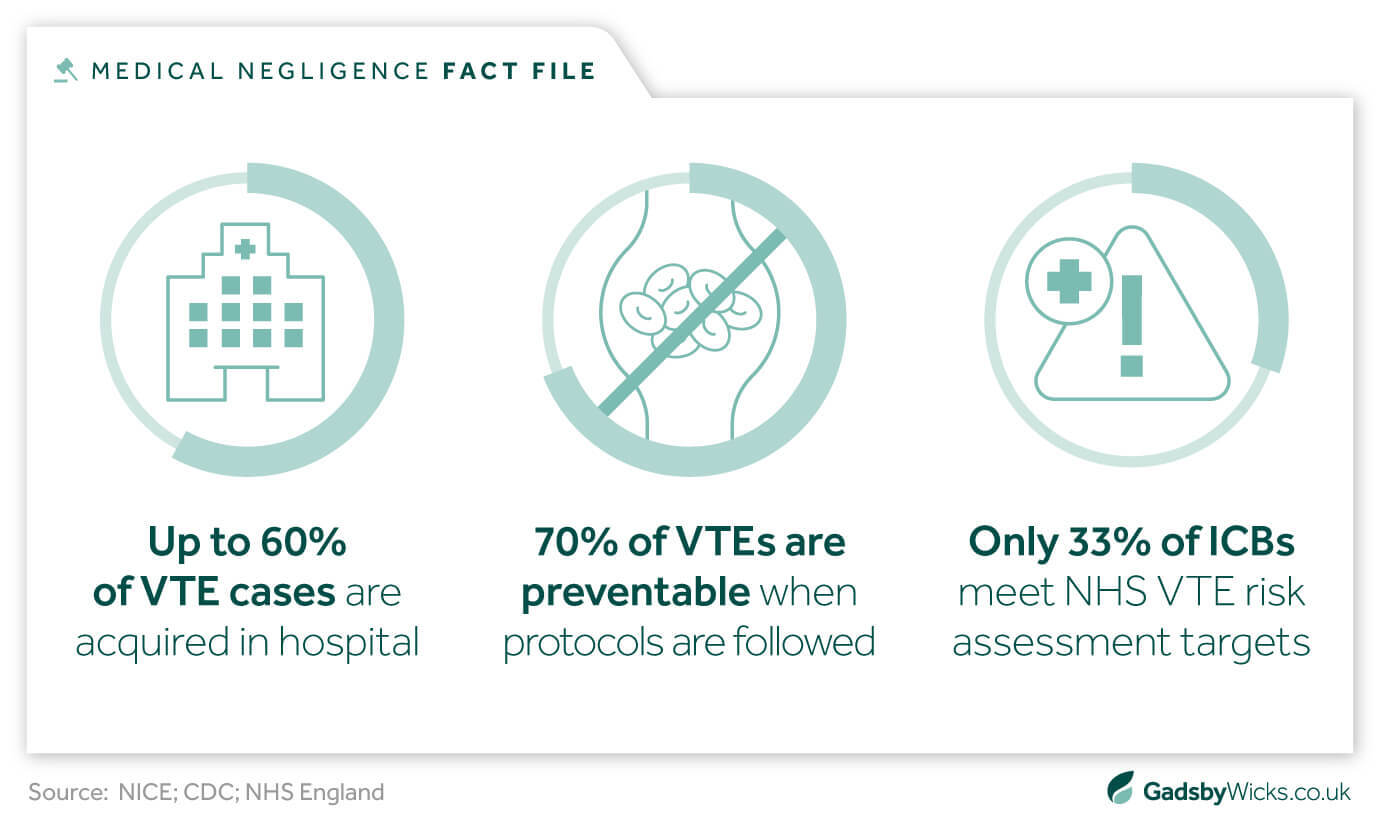
Up to 60% of all venous thromboembolisms (VTE), including deep vein thrombosis (DVT) and pulmonary embolism (PE), happen during or shortly after hospital stays. When one in four people die from causes linked to blood clots, healthcare providers should take all precautions to minimise this risk.
In most cases, they do. But when a blood clot forms because of a missed assessment, a medication error, or a failure to act on warning signs, patients and their families deserve answers.
Below, we explain what Hospital Acquired Thrombosis (HAT) is, how hospitals should prevent it, what can go wrong, and what your legal options are if you or someone you love was affected.
Hospital Acquired Thrombosis (HAT), also known as Hospital Associated Thrombosis or Hospital Associated VTE (HAVTE), is when a blood clot develops in a patient during their hospital stay, or within 90 days of hospital discharge.
VTE or venous thromboembolism is the umbrella term for two serious blood clot-related conditions:
Deep Vein Thrombosis (DVT): A clot that develops within a deep vein, typically in the leg.
Pulmonary Embolism (PE): A clot that travels to the lungs, causing chest pain and breathlessness.
VTE is also used to cover examples of arterial clots, such as those that lead to heart attacks and strokes.
HATs are not the only situations where blood clots develop, but they are among the most common.
Who is at risk of Hospital Acquired Thrombosis?
While any patient can experience Hospital Acquired Thrombosis, patients who are considered at greater risk of HAT include:
Patients who are immobile or who require prolonged bed rest
Patients who underwent recent surgery – DVTs after a knee replacement or hip replacement are a notable risk
Patients who are obese
Patients who have cancer or are being treated for cancer
Patients who are older
Pregnant patients, or following childbirth
Patients with a personal or family history of VTE
Healthcare professionals are expected to prioritise VTE risk assessments for patients who fall into the above categories. Having one or more risk factors increases the danger significantly, which is why these structured assessments exist.
How common is Hospital Associated VTE?
Globally, it is estimated that 60% of all VTE cases are acquired in hospital, while approximately one in 20 people will experience VTE at some point in their life.
Furthermore, according to Thrombosis UK, VTE accounts for up to 10% of all inpatient deaths. This illustrates the severity of developing a blood clot while in hospital, as the ramifications are often life-changing, if not life-threatening.
How do hospitals prevent Hospital Associated Thrombosis?
The NHS has clear protocols for VTE prevention, designed to minimise the risk of inpatients developing blood clots – particularly those who are considered high risk.
As noted earlier, patients aged 16 or over should undergo a VTE risk assessment on admission, and at any point their condition changes. The Wells Score (or Wells Criteria) is used to estimate a patient’s pre-test probability for developing a DVT or PE, considering factors such as:
Heart rate
Immobilisation
Clinical signs and symptoms of DVT/PE
Swelling of the legs
Previous diagnosis of PE or DVT
The Wells Score determines what tests are safe to check for VTE. If the Wells Score is low, a D-dimer test can be performed to detect evidence of clotting activity. In higher-risk cases, further imaging such as a Doppler ultrasound for DVT or a Computed Tomography Pulmonary Angiography (CTPA) for PE is the safer route.
Outside of testing, thromboprophylaxis is the umbrella term for the preventative measures used for VTE, which include:
Hospital DVT stockings: Also known as compression or anti-embolism stockings, these help keep blood moving in the legs for immobile patients
Injections to prevent blood clots in hospital
Anticoagulants and blood thinners (used for both prevention and treatment)
Early mobilisation post-surgery
Consistent hydration
These preventive measures can greatly reduce the risk of patients developing blood clots during and in the months following their hospital stay. However, it is important to note that while an estimated 70% of VTEs are preventable, some patients will develop clots despite all the correct steps being followed.
Are hospitals meeting VTE risk assessment targets?
The NHS Standard Contract sets a benchmark that at least 95% of inpatients aged 16 and over undergo VTE risk assessments when admitted to hospital.
However, recent data suggests that only a third of ICBs are meeting this quota. In fact, a Freedom of Information exercise by Thrombosis UK in 2022 found that more than 50% of NHS Trusts failed to meet the 95% VTE risk assessment target.
This is more than an administrative oversight. It represents direct missed opportunities to intervene and potentially save lives or prevent serious injuries.
Now you know what hospitals should do to help prevent Hospital Associated Thrombosis, here are some examples of clinical errors or inactions that can heighten this risk:
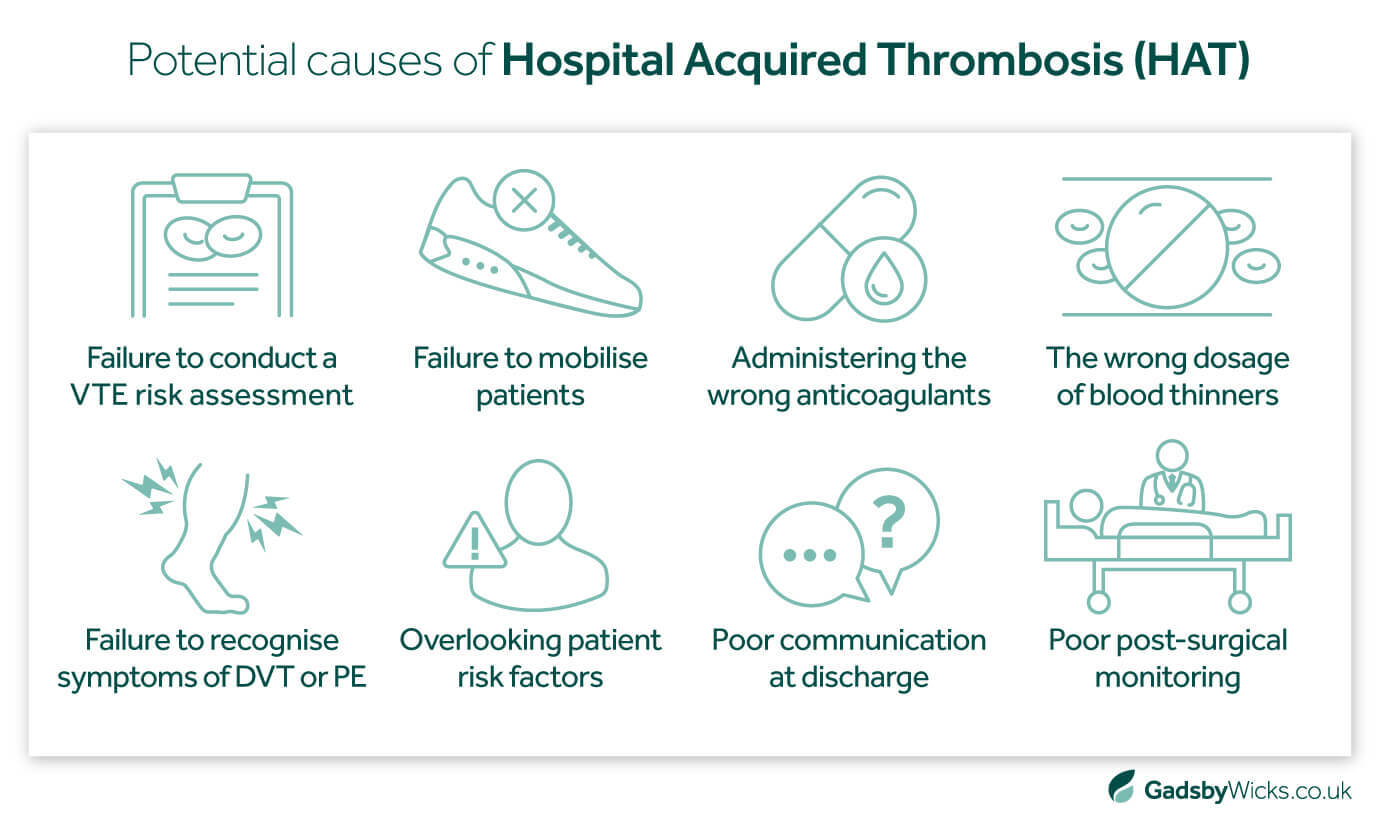
Failure to conduct a VTE risk assessment, or conducting it inadequately
Prophylaxis and medication errors, such as administering the wrong dosage or type of anticoagulant medication
Failure to mobilise patients
Failure to recognise or act on symptoms of DVT or PE
Ignoring or not recording a patient’s known risk factors
Post-surgical neglect or poor monitoring, especially for orthopaedic procedures like knee and hip replacements, where VTE risk is higher
What are the consequences of Hospital Associated Thrombosis?
For many people, the effects of Hospital Associated Thrombosis don't end when they leave the hospital. They impact their daily lives, their relationships, their ability to work and more.
In the worst-case scenarios, it can be fatal. HAT is widely considered the number one cause of preventable in-hospital death, with data showing that VTE is responsible for approximately 5,000 deaths per year.
Other serious outcomes include:
Post-thrombotic syndrome (PTS): A chronic condition following DVT that causes persistent leg pain, swelling, skin changes and ulceration
Chronic thromboembolic pulmonary hypertension (CTEPH): A long-term complication of PE where clots are not fully resolved, putting pressure on the lungs
Increased risk of future VTE: A first clot significantly raises the risk of future clots, requiring long-term anticoagulation
Psychological harm: It is common for patients to experience heightened anxiety, PTSD and other mental health complications following a VTE
Day-to-day impact: The damage caused by a VTE can lead to reduced mobility, inability to work and ongoing medical care
Fundamentally, VTE can endanger lives and leave a lasting impact on a patient’s quality of life. Any mistake or oversight that leads to a patient developing blood clots should be taken seriously and thoroughly investigated.
Mr F came to us after a routine knee procedure left him with injuries that changed his life permanently. Following his surgery, Mr F felt tightness and pain in his leg, and blood would run when he attempted to move.
Despite this, Mr F was discharged home shortly after surgery. But days later, his leg was increasingly painful and swollen. At A&E, examinations revealed an arterio-venous fistula at the back of his knee and a DVT in the posterior tibial and peroneal veins.
Surgery and medication handled the immediate danger, but the damage remained. Mr F must take Warfarin for life and cannot kneel or put pressure on his knee due to the pain. As a self-employed builder and kitchen fitter, this robbed him of the career he had built.
For more on Mr F’s experience and how we help him recover compensation, read his full case study.
If you or someone you love developed DVT during or shortly after your hospital stay, and you suspect that this was due to mistakes made by your healthcare providers, you have the right to pursue a DVT negligence claim.
We know that the last thing you want, after everything you've already been through, is a legal process that adds to your stress. We do everything in our power to make the claims process as straightforward as possible, guiding you with total compassion and clarity of what to expect.
After completing our online form or contacting us directly, we arrange a free initial consultation with our nurse advisers to discuss your situation. Should we accept your case, we will assign one dedicated solicitor to oversee your claim from start to finish.
From here, we obtain and investigate all available evidence and handle negotiations with the defendants to ensure you receive the right settlement for your injuries and the impact they have had on your life.
How do I prove negligence caused HAT?
As mentioned earlier, not every case of HAT is due to negligent treatment. Sometimes it happens despite every precaution being taken.
To prove DVT negligence, you must demonstrate that:
Your healthcare provider breached their duty of care to you.
You sustained physical, psychological and/or financial harm.
Your suffering was directly caused by the breach of duty (causation)
All three criteria must be fulfilled for there to be a valid claim. To do this, we investigate a wide range of evidence, including:
Medical records
Witness statements
Complaints correspondence
Independent medical expert reports
The independent medical expert reports are particularly crucial to prove both breach of duty and causation in DVT compensation claims. This insight into whether healthcare providers acted unreasonably or directly caused a patient’s injuries is decisive to a claim’s success.
How long do I have to make a claim?
Like all clinical negligence claims, there is a three-year time limit to make a DVT negligence claim. This starts either from the date of the injury, or from the Date of Knowledge (when a person should have become aware that something was wrong).
There are exceptions to this general rule:
If the claimant is under 18, the limitation period lasts until their 21st birthday
If the claimant lacks mental capacity, there is no limitation period
If the claimant dies after the claim has started, the three-year time limit restarts from their date of death
Sadly, death is a prominent outcome in cases involving VTE. For more information, please read our page on death by medical negligence claims.
How much does it cost to claim?
At Gadsby Wicks, we believe that everyone has the right to justice, no matter their financial circumstances.
We fund claims on a strict ‘no win, no fee’ basis. This means our clients pay nothing upfront, and we only get paid if their claims are successful. Furthermore, we take our fee from the compensation awarded, so you are never at financial risk at any stage of the process.
How much compensation can I claim?
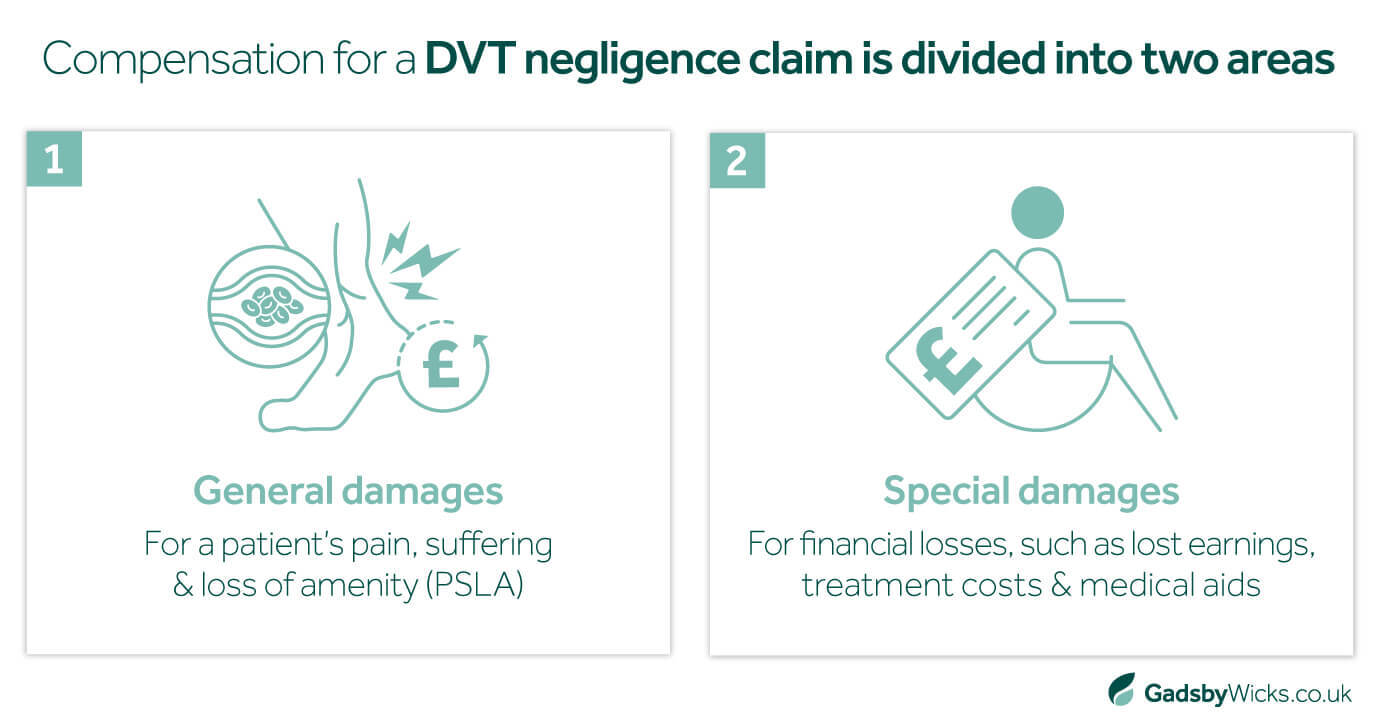
DVT negligence compensation is divided into two areas:
General damages: For the claimant’s pain, suffering and loss of amenity
Special damages: For past, present and future financial losses
There is no average settlement for an HAT claim, as it depends heavily on the specific injuries sustained by the patient and the long-term consequences. A case involving post-thrombotic syndrome will attract more compensation than a case with a full recovery.
Factors that may be considered when calculating the final settlement often include:
Loss of earnings
Medication, treatment and therapy costs
Ongoing care costs
Travel expenses
Adaptations to the home or vehicles
Medical aids and equipment
Through our investigations, we will offer a clear estimate of the expected settlement and keep you updated throughout our negotiations with the defendants.
If you've reached this point, it's likely because you or someone you care about has been impacted by Hospital Acquired Thrombosis.
When these incidents are the result of substandard care or avoidable mistakes, those affected deserve answers. They deserve compensation. They deserve justice.
If this applies to you or someone you love, we are here for you. As the specialist clinical negligence solicitors in Essex and East Anglia, we have the experience, the knowledge and the compassion to ensure you get a clear explanation of what happened, and achieve a settlement that protects your financial future.
Since 1993, we have managed over 5,000 cases and recovered over £300 million in compensation for our clients
Our solicitors are accredited by The Law Society, APIL, AvMA and more reputable industry bodies
96% of our claims settle without needing to enter a courtroom
We work on a ‘no win, no fee’ basis, so you pay nothing at any stage of the process
All content contained within this article is meant for general information only – this should not be treated as a substitute for medical advice from your doctor or another healthcare provider. If you require legal advice specific to your situation, please contact our team directly.
Gadsby Wicks is not liable for any diagnosis made from the content of this article, nor does it endorse any service or external site linked to within the article.
Always consult your GP if you are concerned about your health and wellbeing, or speak to us if you require legal advice.
Tell us about your claim: what happened, when and where it took place. Your submission will be personally reviewed by one of our experienced Nurse Advisors; trained professionals who will contact you to support you through the next steps of your claim.


 Back to top